
Nemo: when you buy a knife you will be sooner or later, depending of many factors, confronted to a dull edge. Getting away from the factory edge is like leaving your parent’s home: it is uncharted territory for most of us. So should you waith for the knife to be dull or immediatly hit the stones to make it yours and why ?
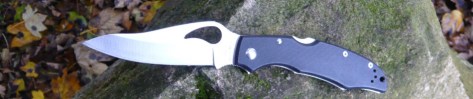
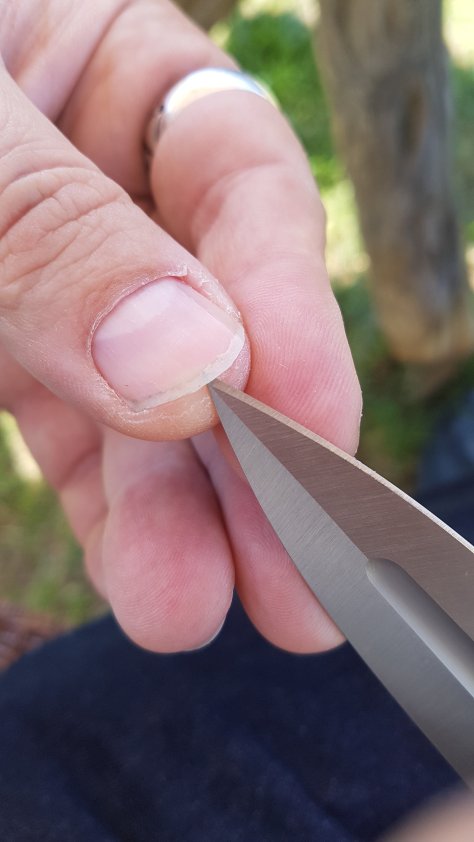
JD: When I get a new knife I check the edge to see what condition it is in. I pinch it between my fingers to see how thick it how thick the blade is just behind the edge. And just look at the edge see if the edge bevel is even. Some times you can see unevenness close to the ricasso. That will take some extra attention and work on the hone to get right. I use light to see if it reflects of the edge, if it does there is a dull spot. Then I check for a burr with my thump nail.

If there is a burr I take a hone, usually the diamond side of the Fallkniven DC4, and remove it. Now I take a receipt of shopping, they are usually thin and consistent, and try push cutting and slicing it. If it cuts the paper cleanly and easily it is good enough to start using. If not, then I will sharpen it first. Depending on edge thickness, edge angle, and steel and what I feel like (knives are a hobby for me!) I will pic a hone and start sharpening.
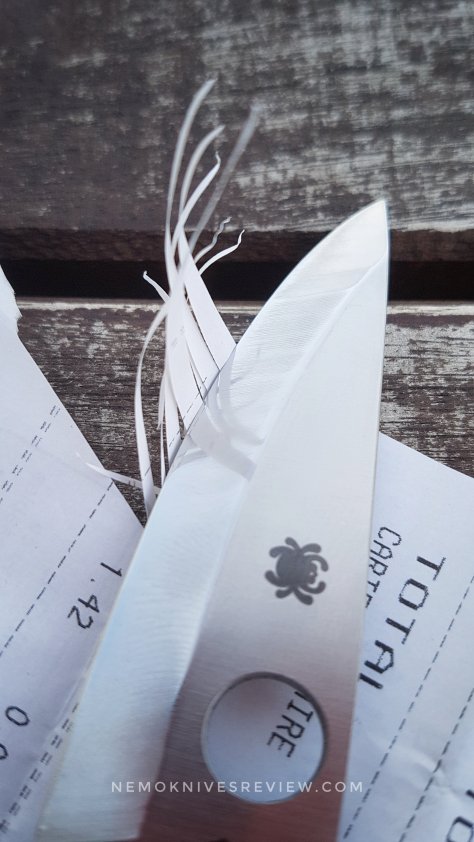
Nemo: knowing sharpening is your hobby is a knife easy to get dull a dream for you ? Or do you prefer your sharp edge to remain sharp for a long time ?
Would you enjoy D2 more than Elmax ?
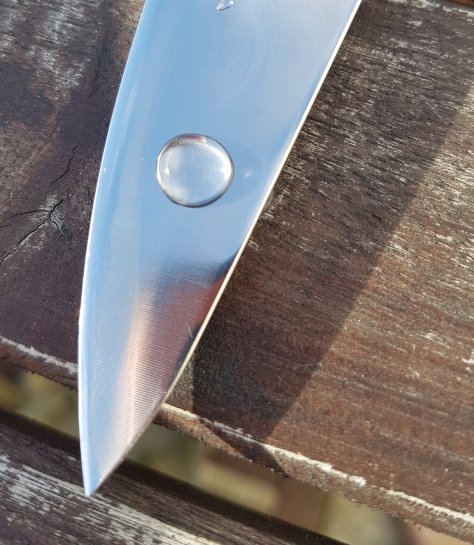
JD: a knife is for cutting and it cut better when sharp. I prefer a sharp knife! 🙂 It needs to cut what I need to cut with ease otherwise it is back to the hone it goes! I also like a knife that when it looses sharpness is easy to get sharp again. So I have no need for high wear resistant steels. But if they are thin at the edge and I like the rest of the knife it would not hold me back either.
If they are both well heat treated and kept cool in production and sharpening there after, both D2 and Elmax would work fine form me. I do not think I could tell them apart in use or sharpening. I am not much of a steel junky, though I like reading about the science of how steel works in knives. (I highly recommend the following books: (in German) Roman Landes: Messerklingen und Stahl and (in English): John D. Verhoeven: Metallurgy of Steel for Bladesmiths!) For me blade geometry and sharpness make a relevant difference. I can tell a thick knife from a thin knife and a dull one from a sharp one far better than the edge retention one steel from another.
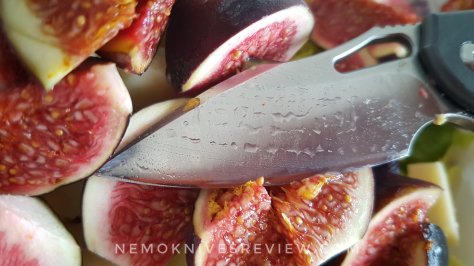
The biggest differences in steel that I notice are, first, how they sharpen, how easy or hard it is to remove steel, and second, how stainless they are. The last bit mostly when cutting fruit.

Nemo: Sharpening wise: what would be the main difference between hollow ground knives and flat grind ?
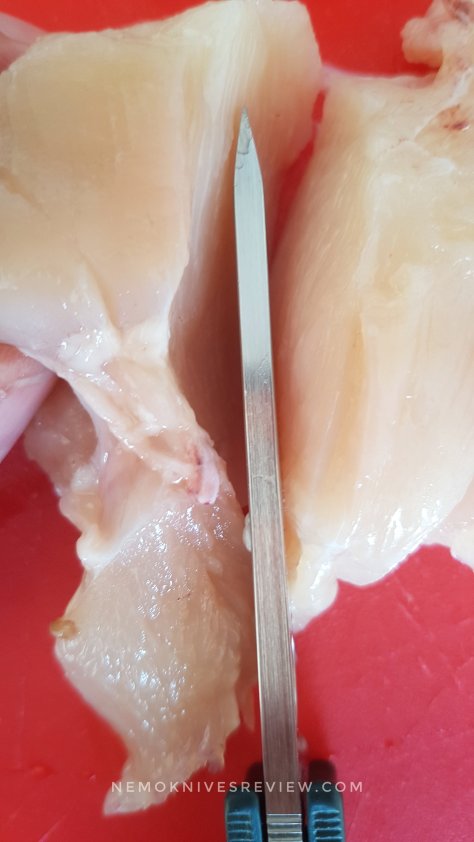
JD: If they are the same thickness behind the edge the hollow ground blade wil take less effort to make the blade even thinner behind the edge, and take less effort to keep the blade thin behind the edge. Hollow ground knives can be laid flat on a hone to make and keep them thin. I have done this with a few knives. One of them a Spyderco Salt1. Now it is almost a single bevel grind (‘scandi’) and much thinner behind the edge. This has made it cut a lot better.
The same can be done with a knife with flat bevels, it just takes more work. When you use and sharpen a knife for a while the edge gets closer to the back of the blade and gets thicker. When it gets thicker it cut worse. To make it cut well again the area behind the edge needs to be thinned out. As a hollow ground knife has less steel behind the edge it takes less work to keep it thin behind the edge.
On flat ground you often need to remove the scratches after …
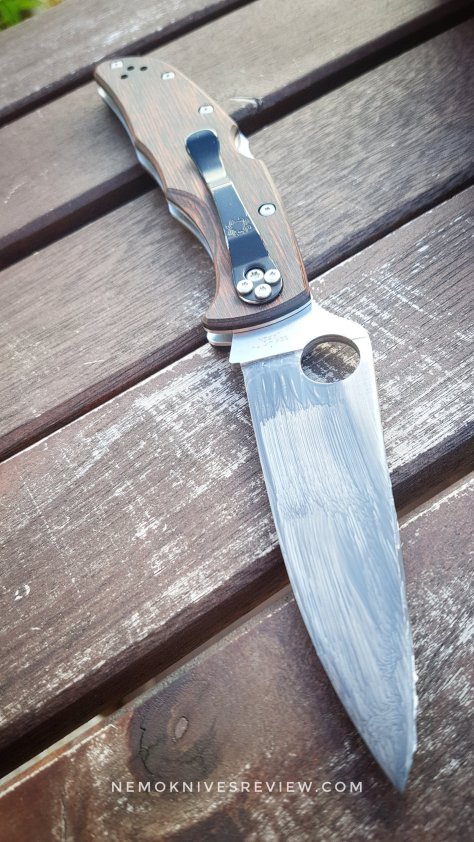
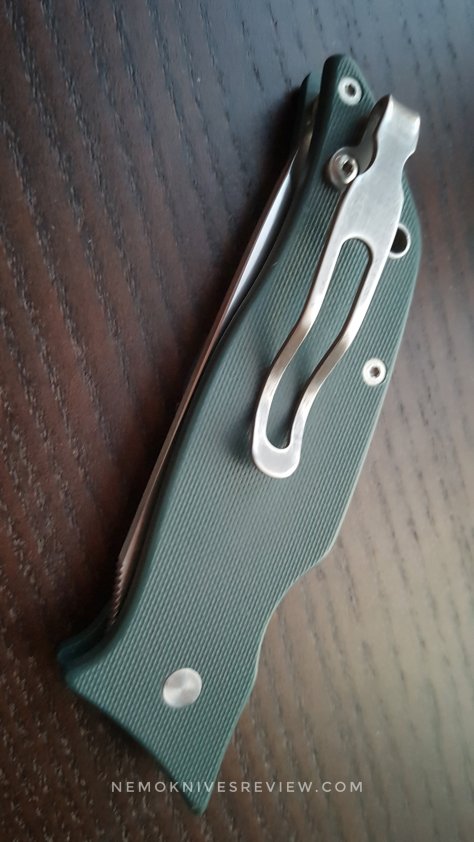
 I had ordered a titanium deep carry clip for my Yojimbo2 but eventually I did not like how it was slowing the draws on that SD folder. But there is one knife which desserved another attempt: the beloved Wolfspyder.
  So here it goes !
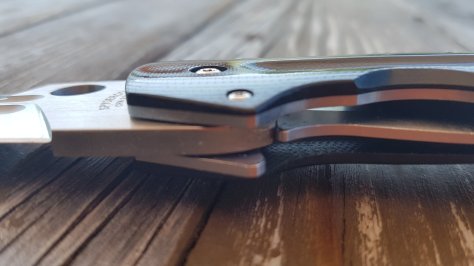
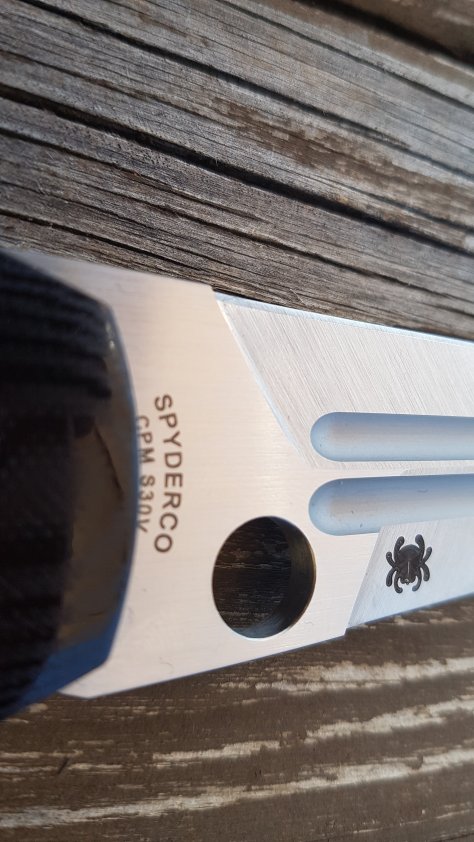
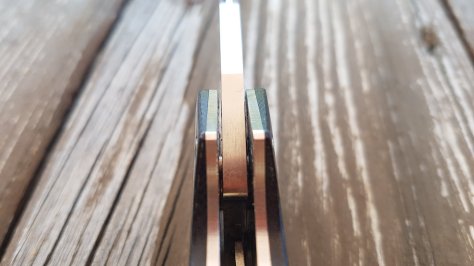
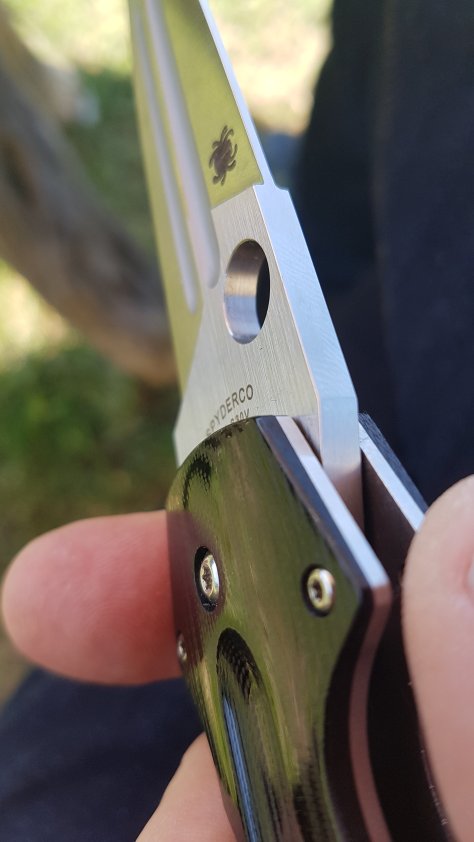
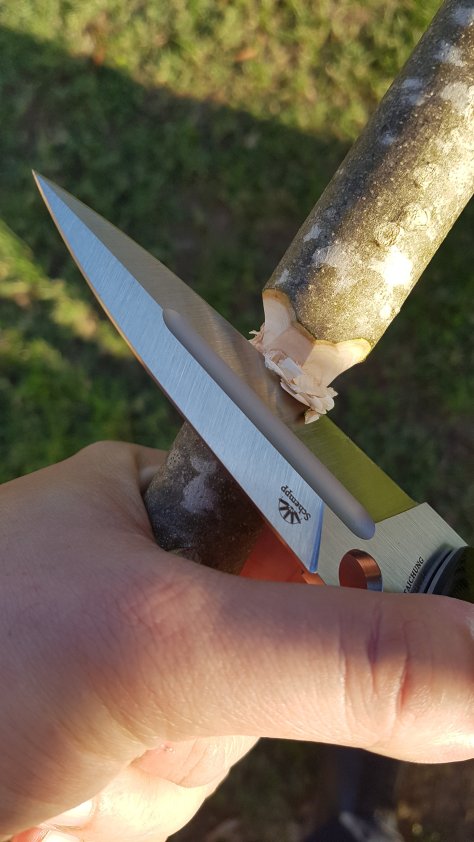
  I’m always amazed at how thick the blade is and how solid this little folder is after one year without real maintenance. I have found the scandi S30V quite easy to maintain razor sharp and to my surprise it is easy to keep that way without any convexing and losing the “zero ground” scandi edge. But the best thing about the Wolfspyder is how hard you can use it with now after thoughts. You can drill with its point and cut hard in wood or plastic. There is no risk of failure from the point to the lock and the thick G10 slabs are confortable during long cuts sessions. Mine has developped zero play in any direction after one year of use. It’s one of the knife which is sheeple friendly and gives a lot of joy in use. Controlling the whittling cut is really something which gives you a grin of satisfaction. The Wolfspyder ? Still highly recommanded in my book. 😉
 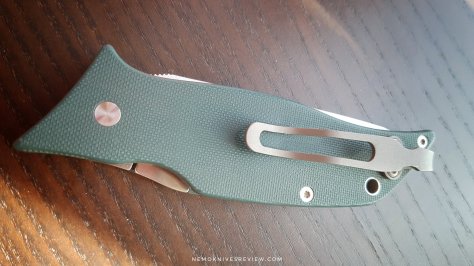 Easy to carry and easy to reach in the pocket. This one will be in my pocket for a trip in Norway very soon ! The Scandi ground little big knife in Scandinavian territory !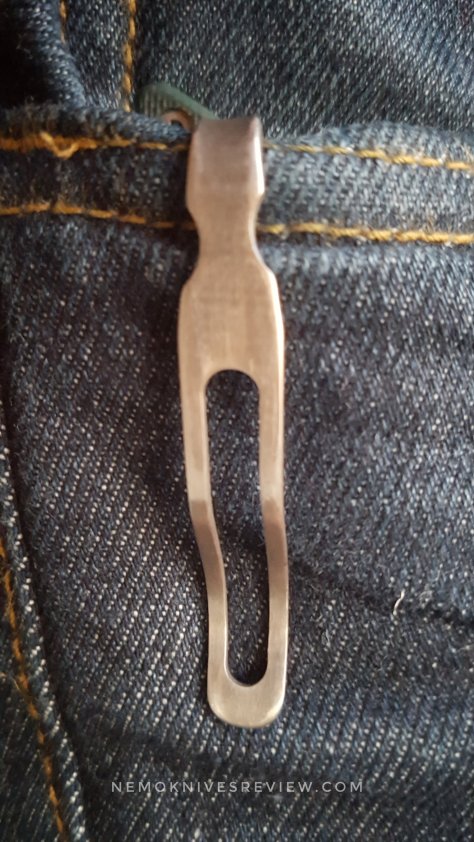
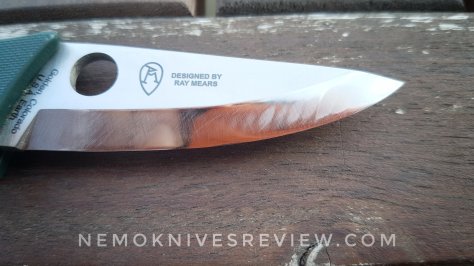


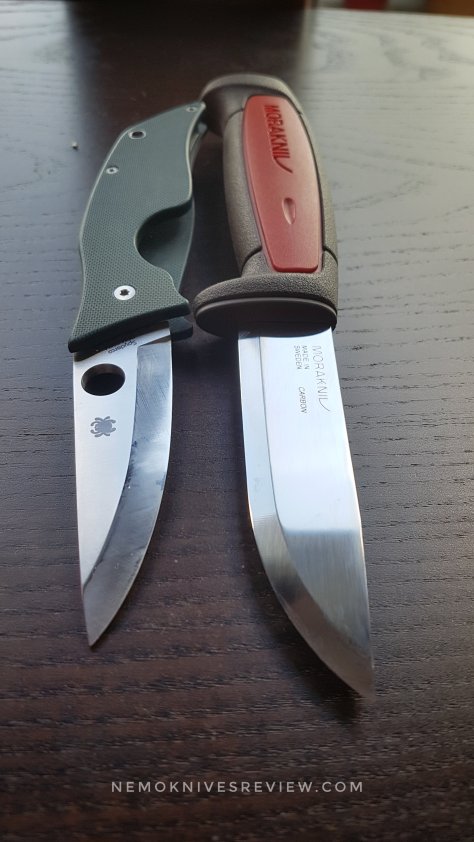






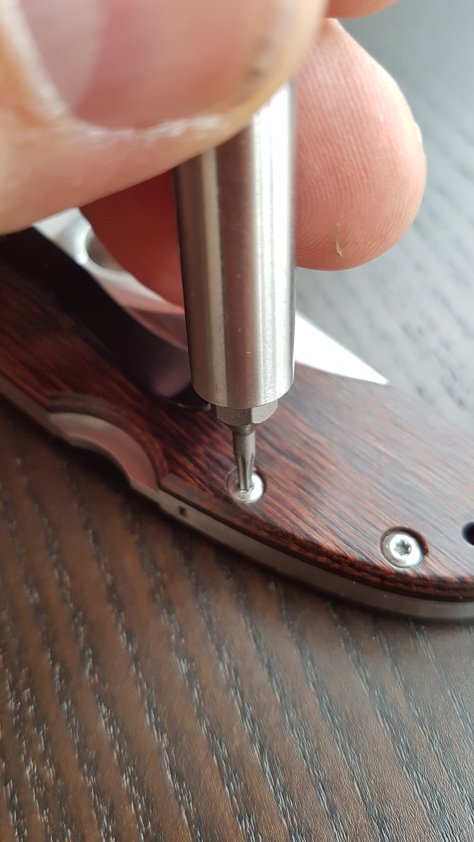
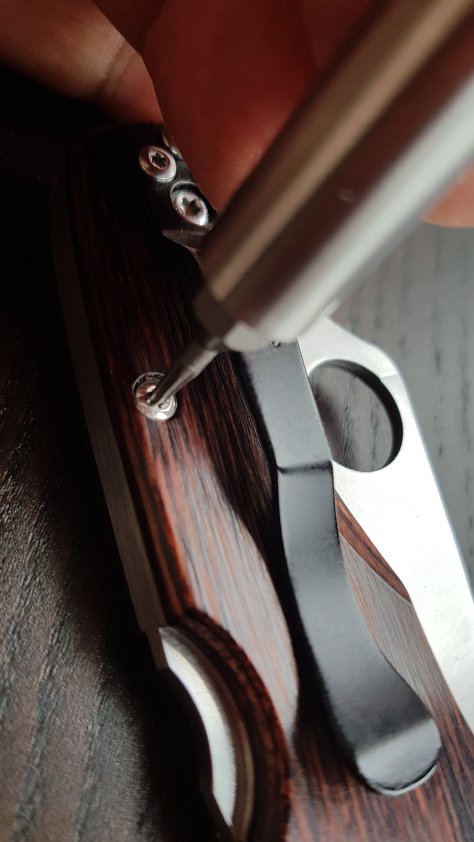

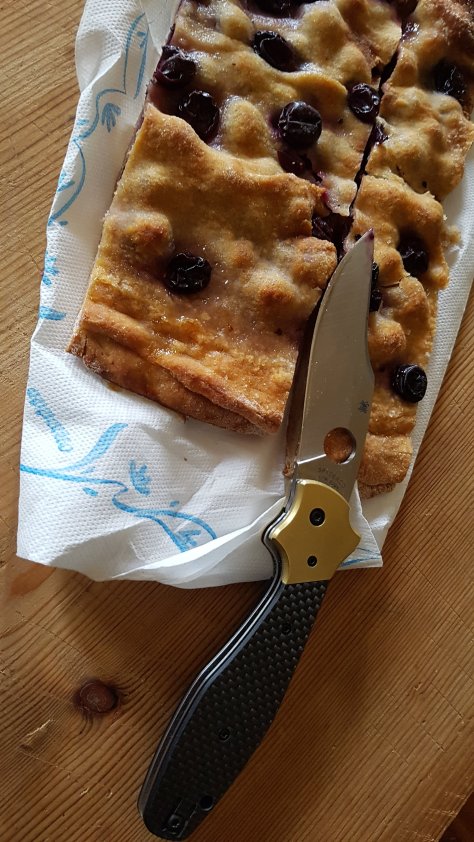





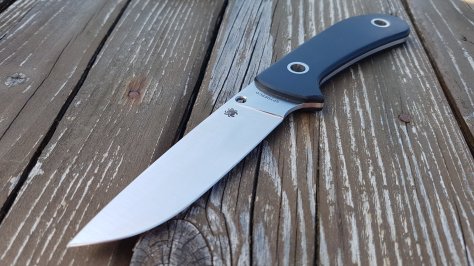 It has all started when I wanted to review the Spyderco Gayle Bradley Junction. It’s a great design for an EDC fixed blade which can be used for everything. Easy to carry in its pancake constructed bolteron sheath. But the edge was just too thick for my own use.
 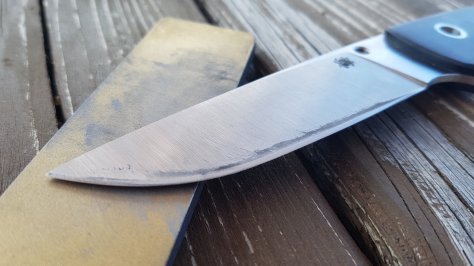 To my knowledge, SPF27 is some kind of CPM D2 steel. A lot of carbon 1.5% and not a lot of chromium around 12%. Not the easiest on the stone as a semi stainless. It was not very soft under the diamonds compared to another blade in N690 HRC59 I got with me. And it was not really easy to remove the shoulder to create a gentle convex edge. Patience… In sharpening is important. And I often lack of it but I was able to improve it.
 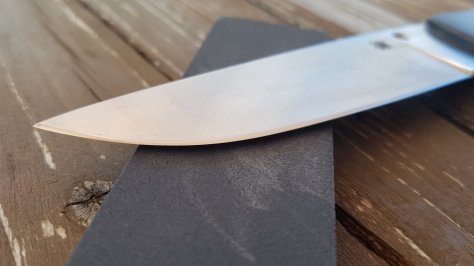 Next some black stone mostly to remove the scratches.
  And then the white ceramic to get a better finish and a razor steel.
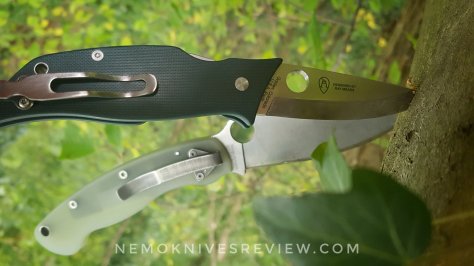
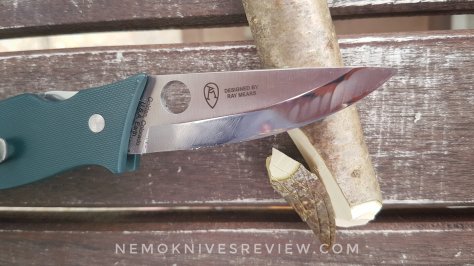
 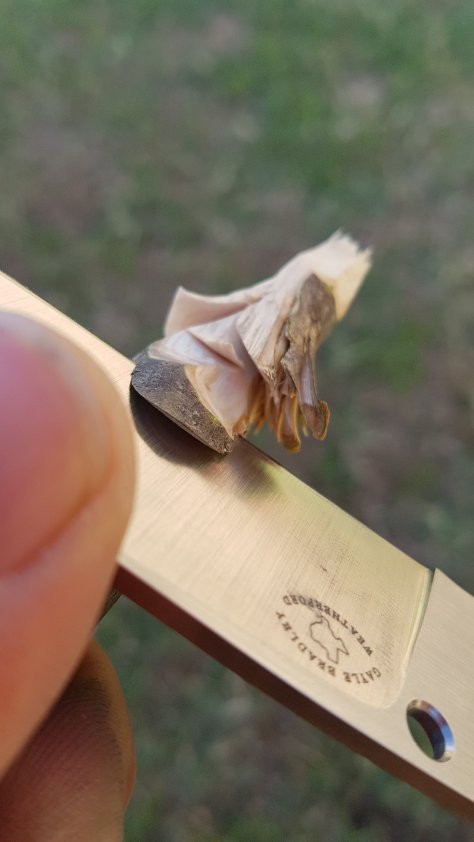 You can notice the chamfered signature hole on the Junction. A première. The cuts were deeper. It was better! Much more enjoyable.
  But the spine was too sharp for my thumb and diamonds came handy to rounded the angles. It would never be a Sebenza spine….
  Again the control during whittling was much much better. One should never be scared to round the edges for suiting your own needs.
  The handle is very flat on that knife. It’s an attention for people who wish to stash their knife in a pocket or a backpack without leaving a print.
  But a flat knife is not the most comfortable in the palm of your hand… Especially when cutting hard things for a long time.
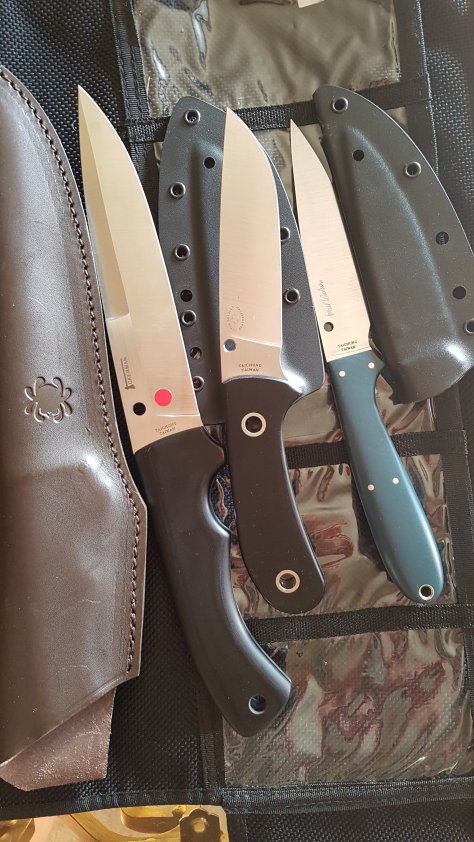
 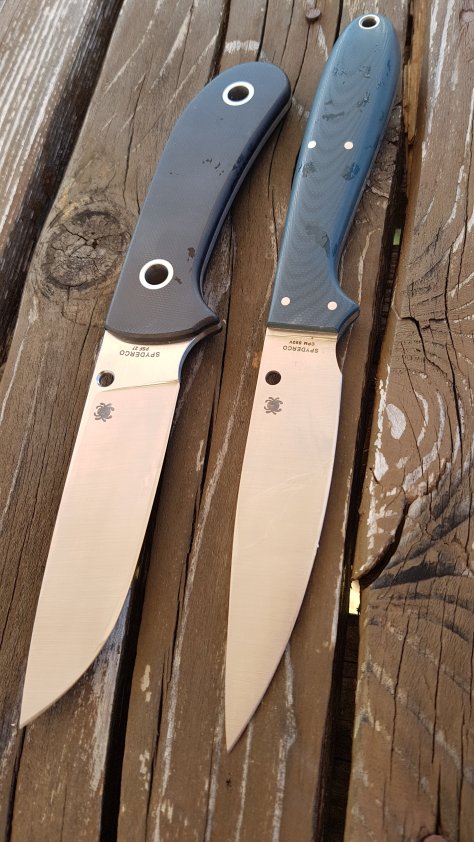 I decided to make a quick comparison with the Spyderco Sprig which is a pleasure to use.
  You can notice how the Phil Wilson’s Sprig got a thicker handle. And it change everything when cutting hard things. Also Phil Wilson’s is all about performances. Its geometry is stellar.
  It immediately cuts deep in wood without any real improvement needed….
 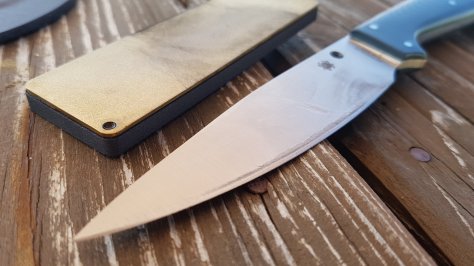 But diamonds were there to be usef. 🙂
  I was able to get thin regular cuts into the wood. So I have decided to try the diamonds on the Gayle Bradley Bowie I have brought with me. This one got a thicker geometry and is made if the same pulverized alloy as the Junction
 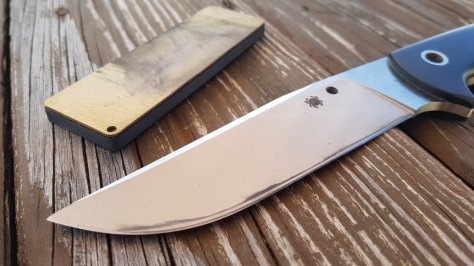 You can always improve an edge.
  Used as a light chopper it worked just fine.
  Gayle Bradley has provided a great compact Bowie which can be used as a light camp knife.
 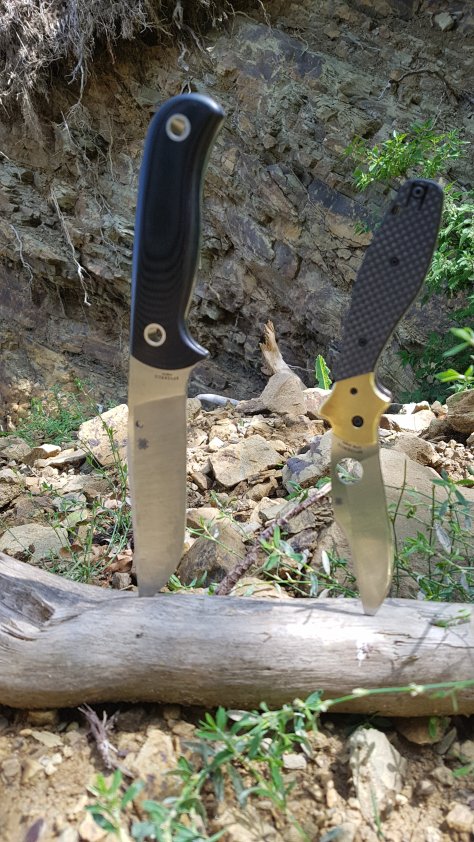 You can see: it’s not a lot bigger compared to my Ed Chempp Bowie.
  And the edge once thinned is honorable.
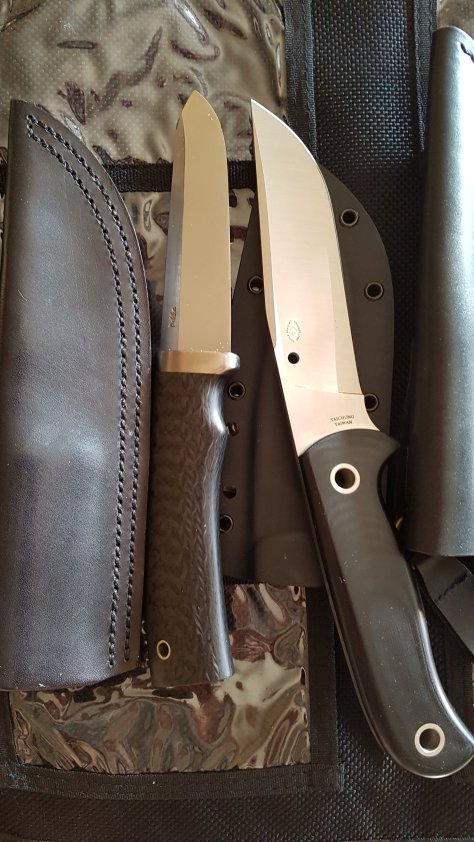
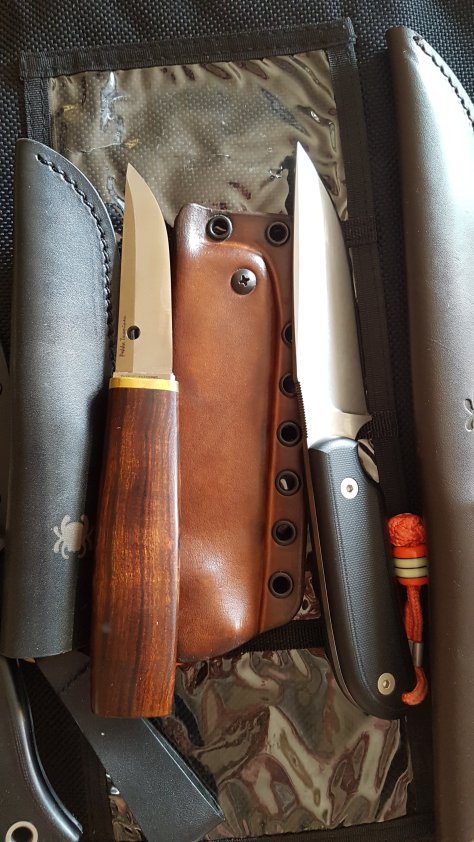
 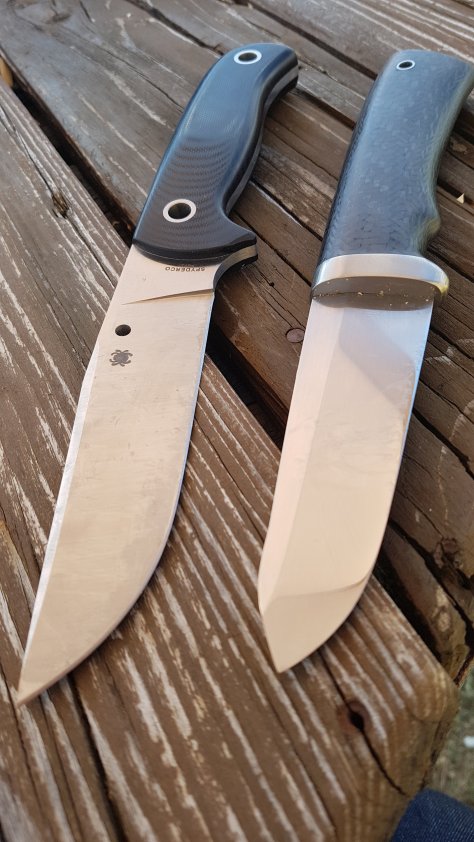 Of course it is not as thin as my Pekka Tuominen Urban II for example. And not as aggressive as the Sprig…
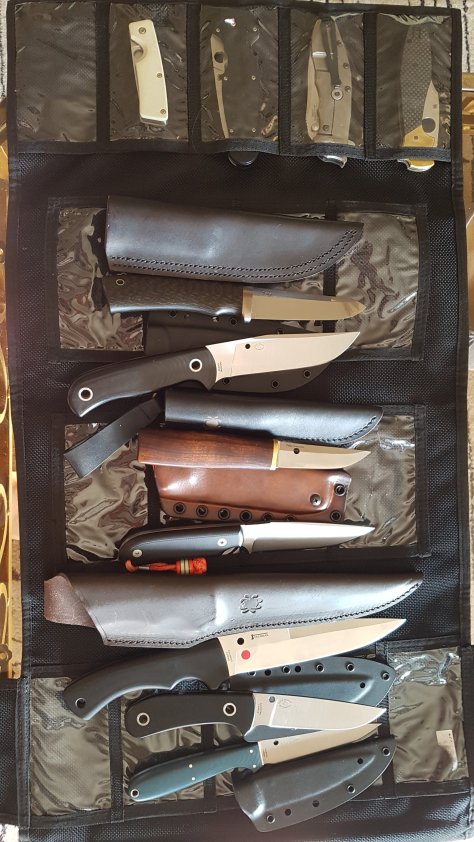
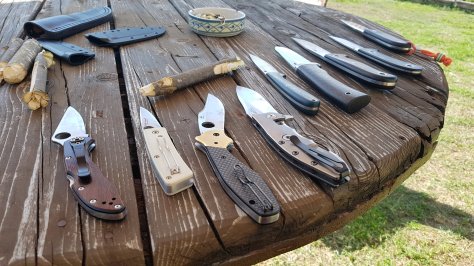 I got…. too much knives on my table…
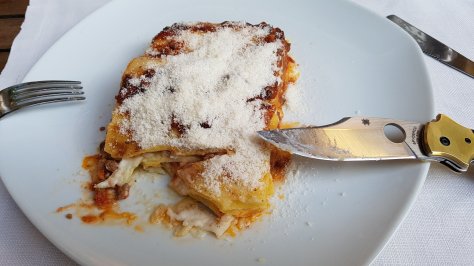
 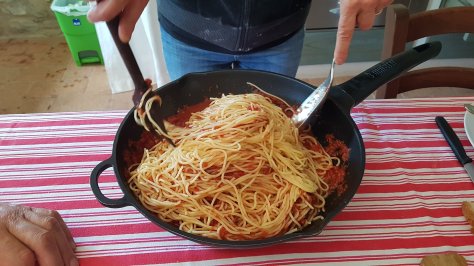 An Francesca knows how to prepare the pasta with pomodori.
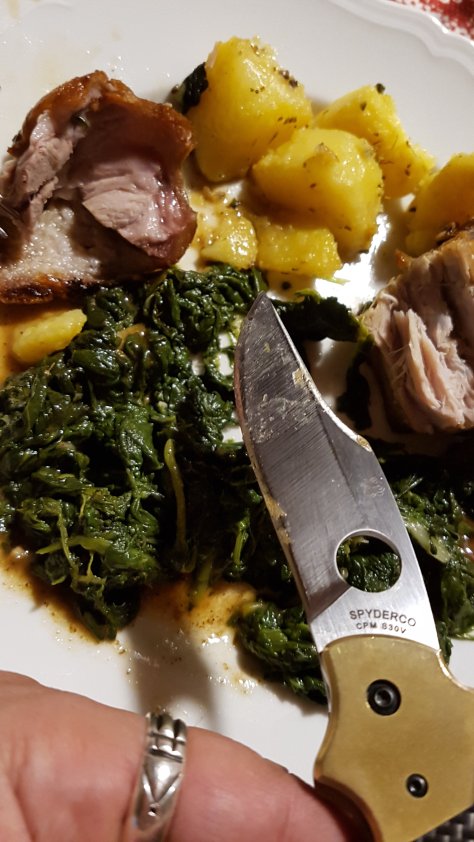
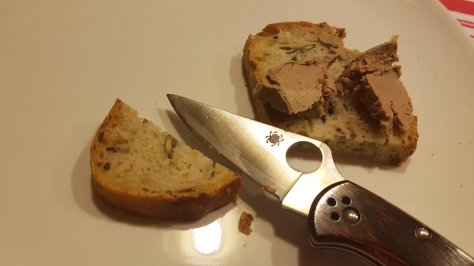
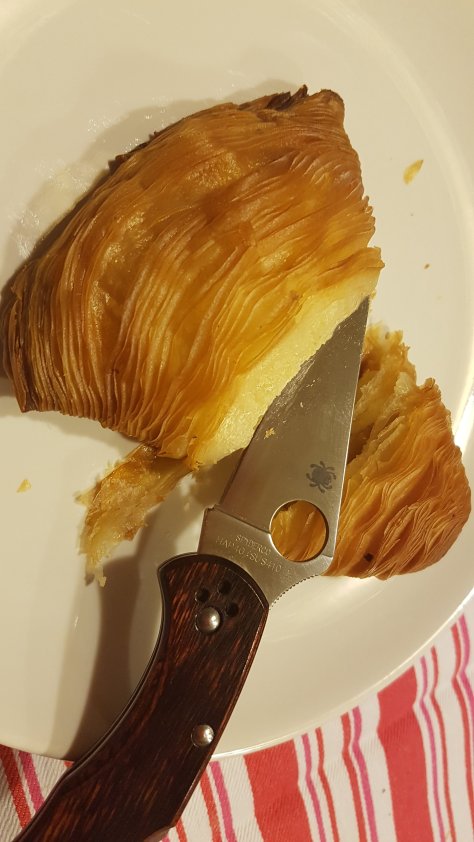
  Crostini a la Toscane. Poultry liver, oignons, red wine, bread and a Bowie.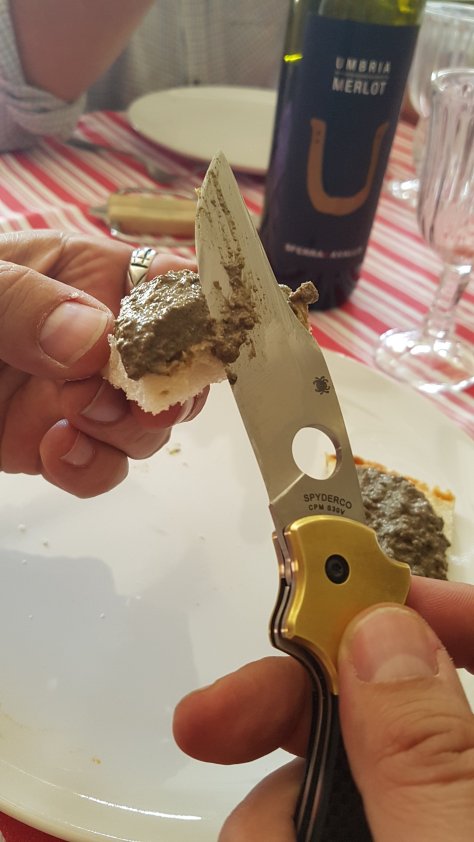
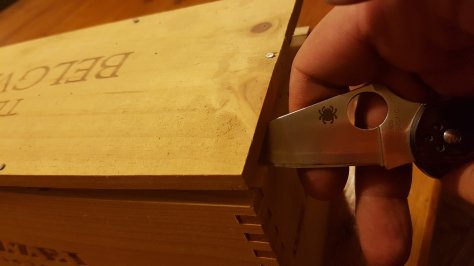
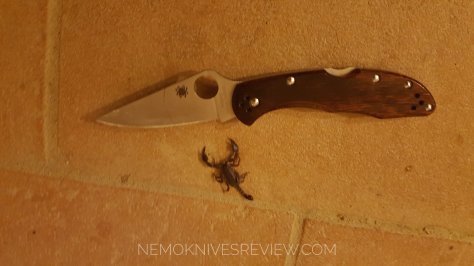
 Also the Delica was able to cut from the ricasso to the point without any hard pressure. In the end, I had noticed that the Junction was less good than the Sprig and the Delica was still the best whittler in the batch. No matter the steel, for wood cutting, geometry is queen. So I have taken my Bowie back to the diamonds and put a keener edge. Tomorrow it will be hunting day.


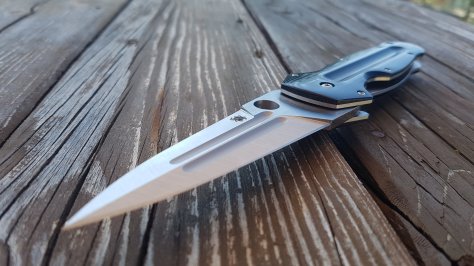













 If the
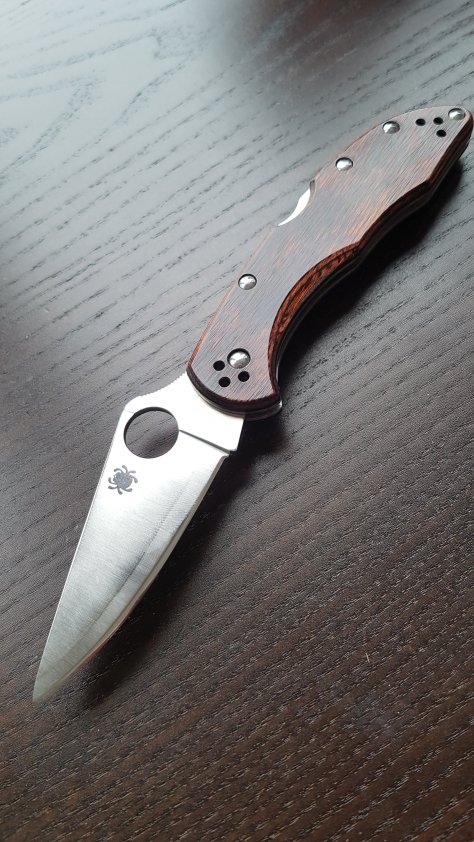
  The Delica got that status of pure EDC as it is small enough to be accepted easily by sheeples. The handle adds a touch of class to this little workhorse and the special alloy blade gives more power to the “matter separator”.
 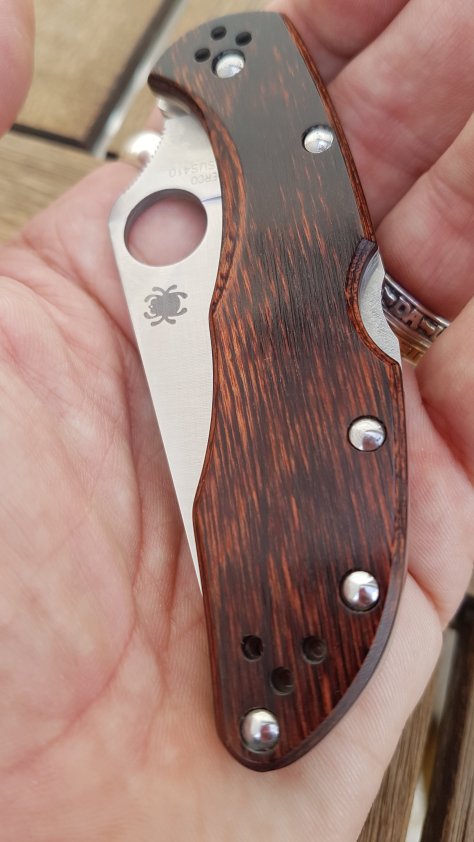 This is little gem is just asking to be clipped and use. As you can notice there is no laynard hole on the version. That can be an issue for some people who use lanyard to retrieve the knife form their pocket and enhance the handle in length. It’s a matter of taste. I love lanyards on knives pictures but I don’t like them on my EDC and the Delica’handle is perfect for my hand.
 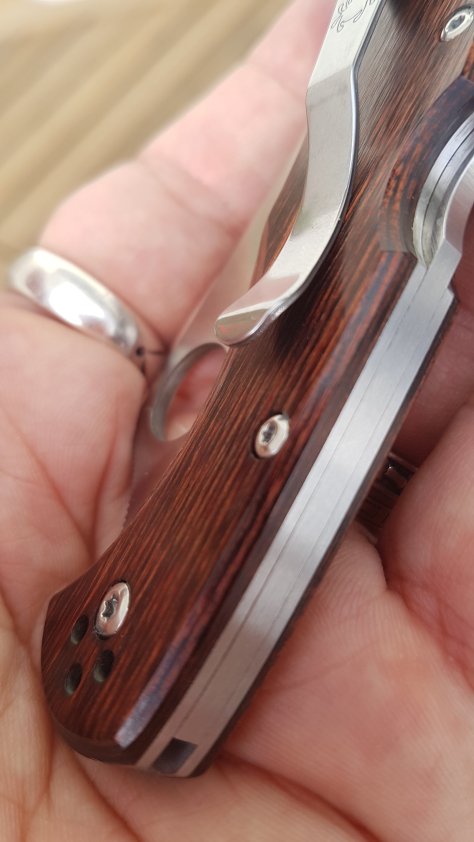 I have kept the clip mounted for tip up carry, on the opposite of the Endura which I open with a Spyderdrop. But the Delica is so smooth that it can be “spyderdropped” too.
 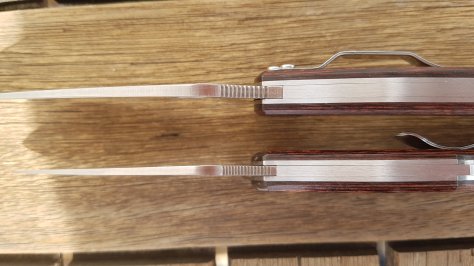 Fit and finish are stellar and you can noticed the 0.5mm of difference in the blade’s stock. Also the full steel backspacegives a feeling of reliable and solid construction pushing the envelop in that great design.
 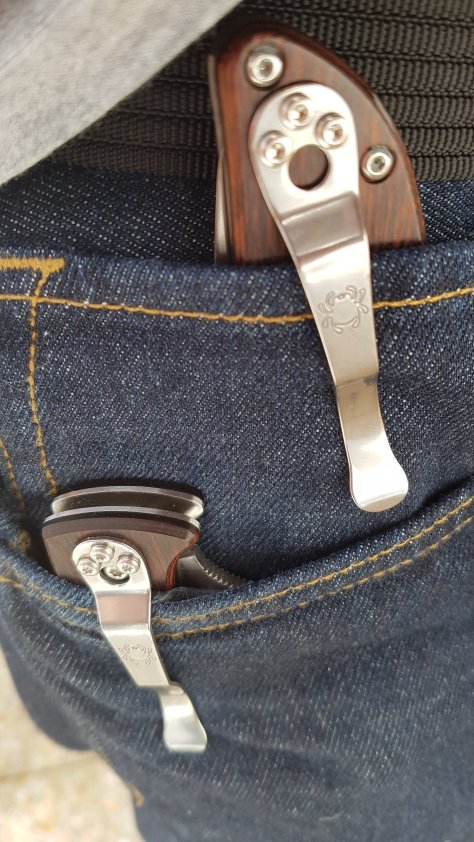 You can notice the hole in the clip which is not in use when mounted on the knife butt compared to the Endura’s mounted on the axis clip. Again, you choose your ways they are four positions. All in all the Delica KnifeCenter’s special edition is an incredible EDC and a must for collector. It’s the kind of knife which can not leave your pocket as it’s flat, soft and precious and with the Endura it forms a true daishō (大小) !!
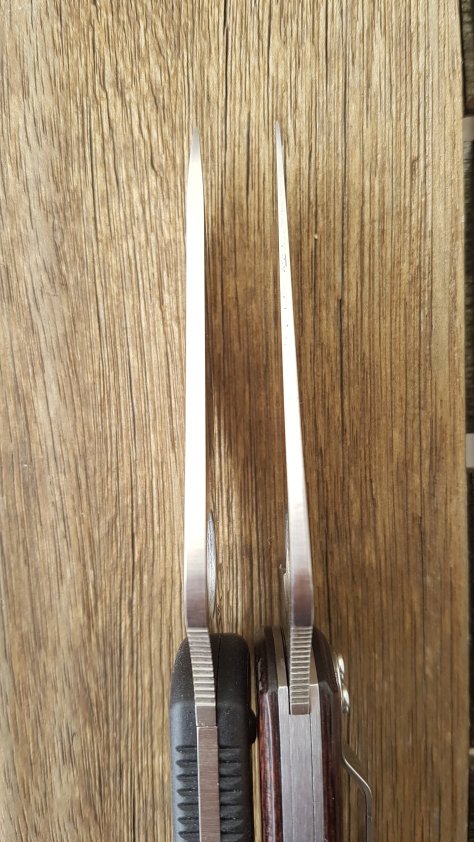
 Eventually after some carrying, I have found that tip down carry was fun. The Delica is one of the shortest Spyderco I can spyderdrop as easy and faster than my Millie. Adding a lot of fun! Also the edge once thinned can use the fact HAP40 is ready for a mini apex. I was cutting bottle my Zero Tolerance could not goo through.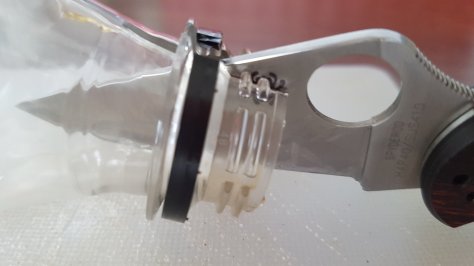








 NemoKnivesReview