Category Archives: Review

SPYDERCO NATIVE C41CFP5 – CPM110V Three years update.

wp-image-1801371413Last year, Jim Ankerson made a Military CPM110V test and was able to “cut 6,000 linear ft of cardboard checking every 500 ft for phone book paper sharpness, would still slice phone book paper after this stage, zero edge damage.” He had stopped but ” it could have cut a lot more. I try and keep the cardboard to a reasonable amount.”
For Euros, this is 1829 meters ! CPM110V is so special to him that it’s his Bladeforum’s profile picture. This is special stuff as seen in my Manix 2 review here.

wp-image-1926118994

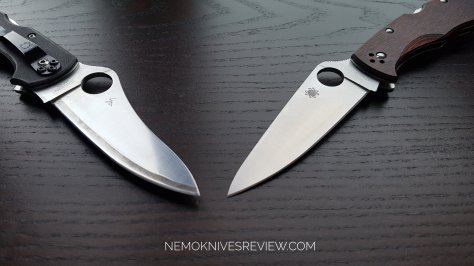
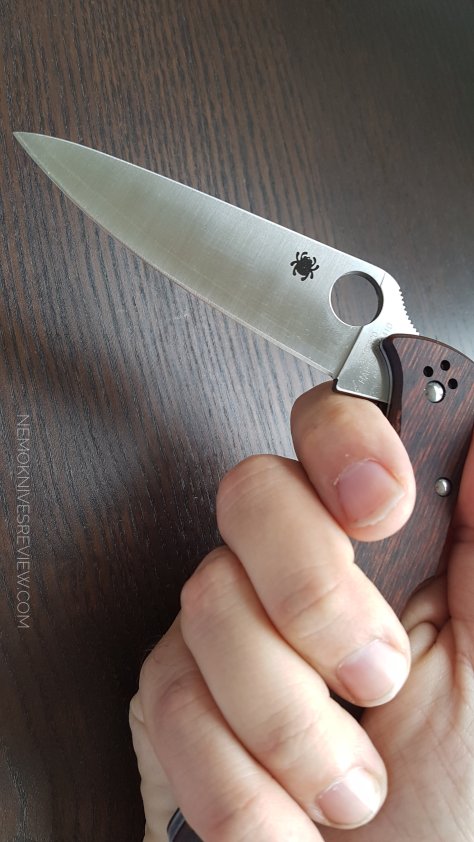
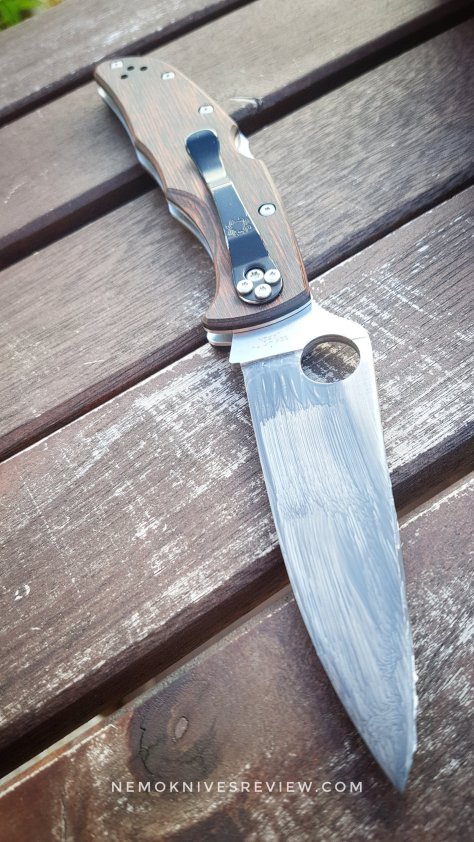
It’s been three years since I got my Native 5 in CPM110V and 6 years since I use a Native 5 as one of my EDC: friendly size, great ergos… Time to look at it.
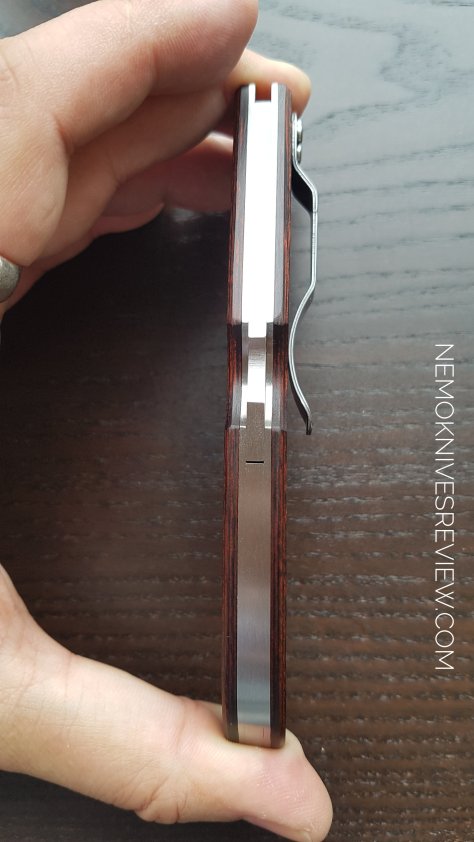
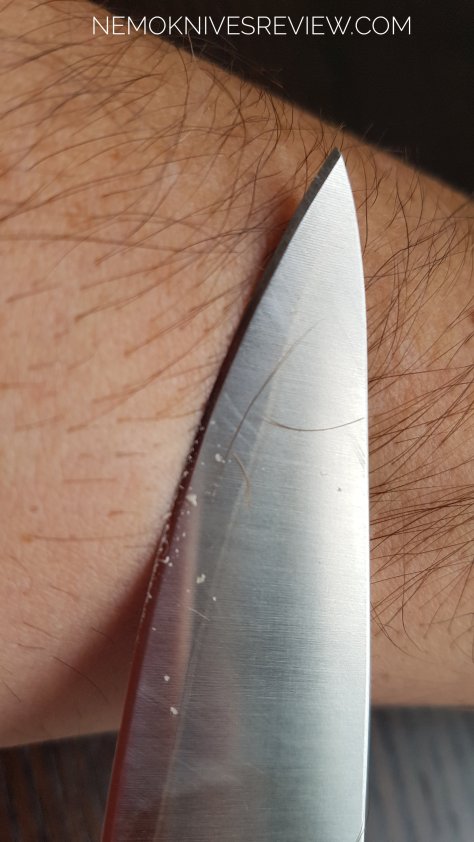
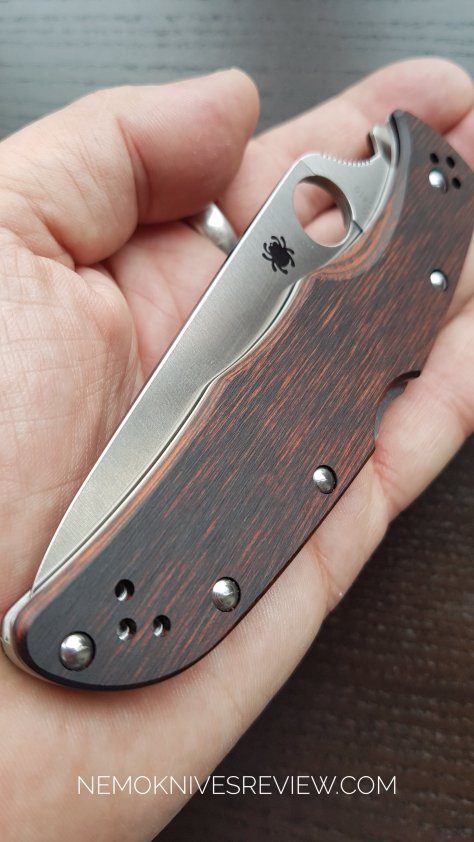
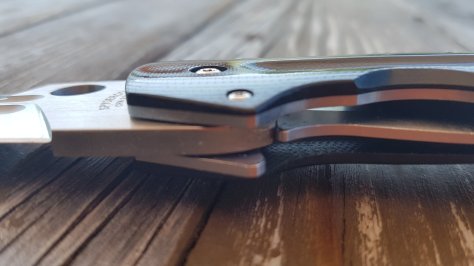
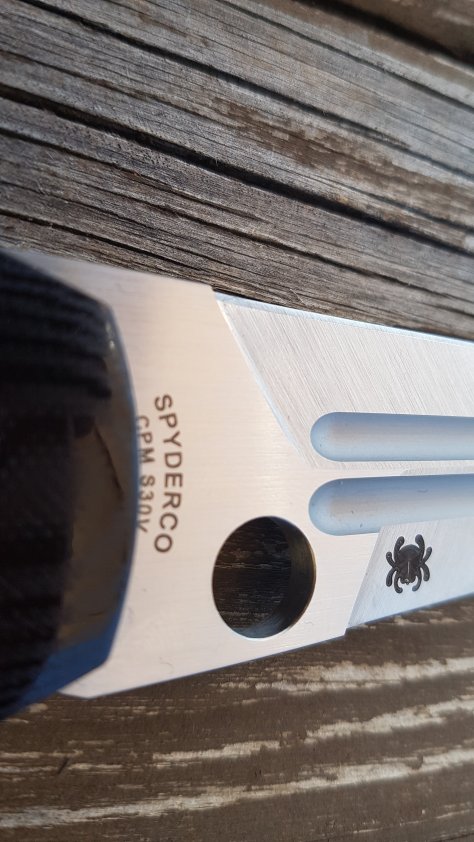
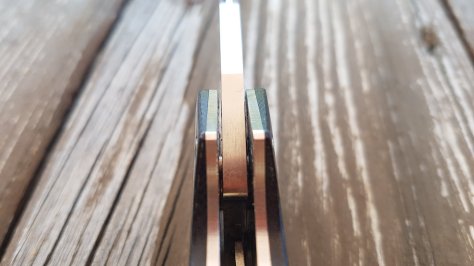
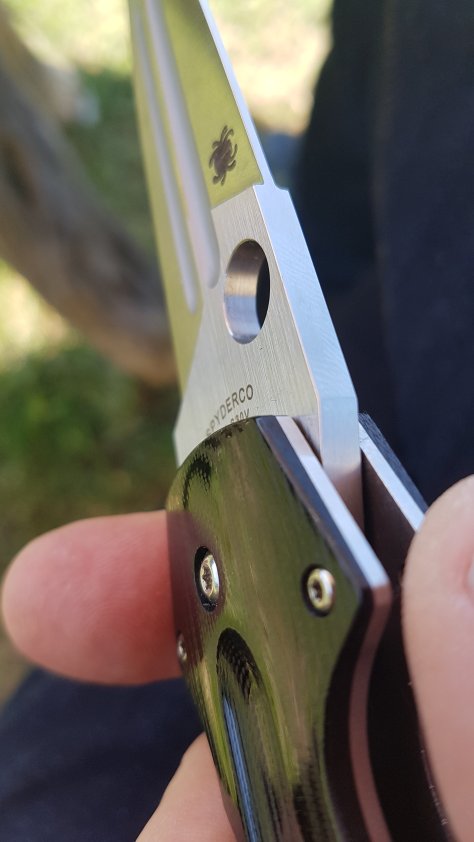
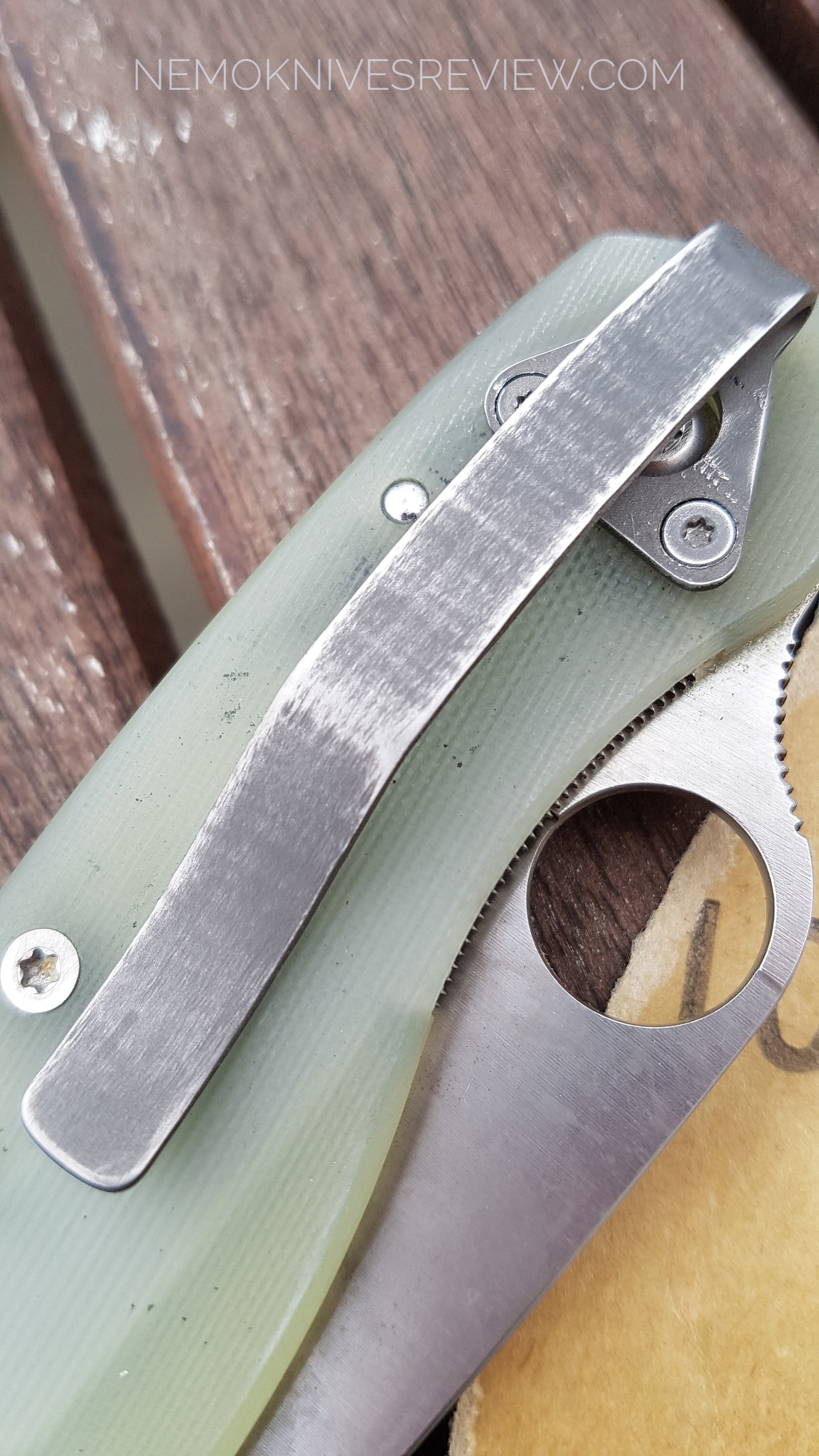
First of all,  I have never touched up the blade. Some stropping but not a single ceramic touch. With its factory edge, the blade looks like new: no scratches at all and the Carbon Fiber handle is pristine.  Those materials are hard and made to last no question this folder is a knife made to be some kind of time capsule. Its backlock is one of the strongest  in the knife industry behind the triadlock and has developed zero play which is great because I got many backlocks with vertical play even out of the box. Spyderco backlocks have undergone many refinements and through better manufacturing tolerances are among the safest and easiest locking systems to operate. To quote a forumite: “the engineering wizards at Spyderco have (IMO) outdone themselves”.

The Native is a must-have for any knifenut and got a near cult following aura. First thing, it’s an all American made knife which is IMHO better than the Seki’s and also it has been designed to be a great EDC. A totally polyvalent knife. It has even been chosen to be the symbolic knife of Spyderco’s 40th Anniversary with a Thor Damasteel blade special CF edition. Now it also exists with flutted titanium handle, full carbon fiber handle and S90V blades and lightweight with Maxamet and 110V…
It’s easy why people are collecting them and clipping them with pride.

wp-image-667072309

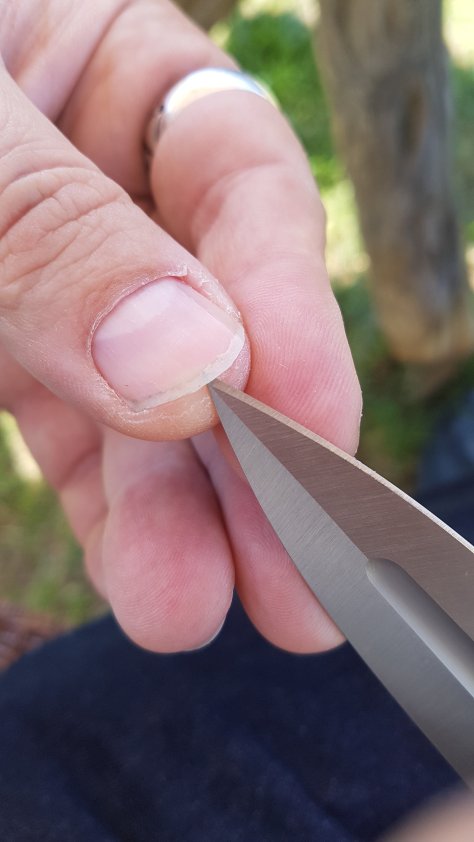
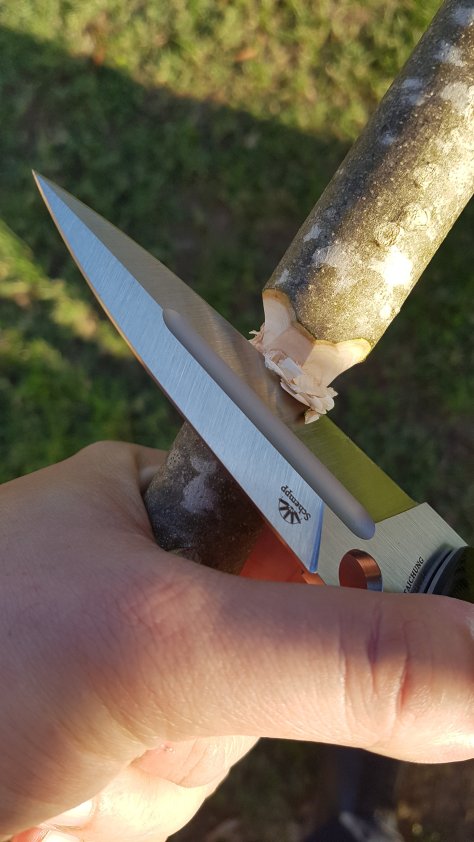
Eventually, during this 3 years I have never used “hard” my Native 5. Simply because the false edge is not thumb friendly. I do push the blade with my left hand thumb when whittling. It has been used in the kitchen, but not that much as its blade is short. It has been used for sausages processing and mondaine tasks. I would have use it as much as my Chaparral… And as the Native is overbuilt, it handles on those task with ease.
Also the handle is a little on the squarish side. I have sand it but even though it is not as ergonomic as a Yojimbo2, the Manixes or the guardless Nilakka. So it is not appealing me to use it hard even if I know the construction can handle it.

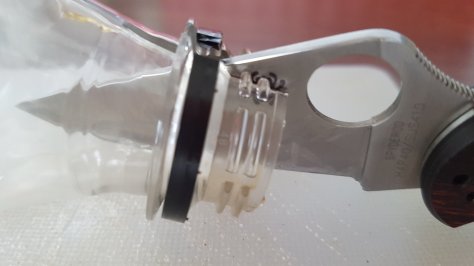
My Native is some kind of overbuilt Gentleman folder. I carry it mainly in the city or in office environment. I know it will 200% reliable and with his thin edge the cutting tasks will be done in a blink. Unless It has failed on a cutting the plastic bottle butt but it was not its fault. The plastic was 4mm thick !

wp-image-94616575

If you want to learn more about Natives:
A 2012 video from MrBlonde (Spydercollector) shows the history of the Native.
Also Paul Beretta (The Deacon) has a great post on his site about it.
The Native was also used for Bladeforums exclusive knives many years.

Bottle bottom push cuts and Nilakka.

All plastic bottles are not equal in thickness. And this batch made me thought my knives were dull until I have used the champion in that category : the Nilakka.

I have found the thickness was on a steady 4mm. Almost twice the usual!

The Nilakka was able to cut through but the Native 5 I was testing could not.

Spyderco C36 CPM M4 – Building a Patina

“After building a Patina, coat it with cheese.”

This is an old trick Fred Perrin used to do just un case someone asked him about his knife:
– Is it a weapon?
– Nope I eat a lot of cheese.
But the cheese grease also protected the blade from pitting. Olive oil, butter are also useful to coat you carbon blade. And they are not toxic.

Eating with your knife is solving a lot of issues: you use your knife a lot, you take care of your edge a lot, you display it and people get used to your taste in cutlery. It’s not a Silent Companion anymore: it’s your coming out as a knifenut.

Ok, first picture was only an industrial cheese, it was mandatory to show a real Camembert from Normandie:

(First made in 1791 by Marie Harel, a farmer from Normandie, she had given refuge to a priest who gave her the recipe in gratitude. She first made the cheese for her family, but word spread and the rest is legend. This version of French Camembert is produced in the heart of Normandie.
The velvety white rind encases a pale yellow interior which softens towards the outer edges. The rind has mild mushroom aromas that are well balanced with the saltiness and supple creamy texture of the interior. The flavour profile displays cauliflower and yeast notes, an indication of a real Camembert…)

You don’t need to force a patina when you eat with your knife. Here, tomatoes with vinagar provide an acid environment able to built it. CPM M4 is much slower than Super Blue Steel in getting darker. A catalyst is heat. Hot meat, hot acid dish (tomatoes) will build the patina quicker. Often, meat loaves will add some rainbow stains which once polished are beautiful.

(My father in law used to clean his knife by thrusting its blade in the earth. Old timer did not respect their blade like us. But one thing is sure, they used them for everything. Their edges were often ruined in the dirt or just by scrapping son paints on a tool, but at least they used them hard.)

wp-image-370095210

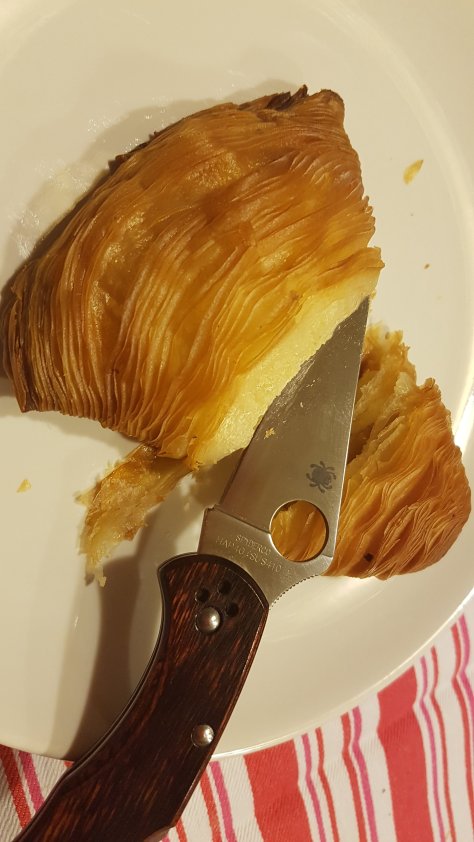
Cutting an apple pie in a plate will be hard on your blade’s point and edges. But again this is the game of letting your precious EDC goes in other hands. Iy your knife is really the quality knife you claimed, you should be able to clean it and refresh it in a blink of the eye.
Again, I also got bad experience by cutting vegetable in the garden and having dirt and earth ruining my edge.

wp-image-2098428597

The point of your knife will get darker sooner than the entiere blade. But this is the signature of a used knife and they are tools to be used.

wp-image-1362488435

In the end, DLC coated blades will never show as much as character as naked carbon steel.

wp-image-1696421388wp-image-2019233986

Spyderco Yojimbo2 – Mission: Italian Salad.

This is my first post sent directly from my smartphone. As I’m looking for easier way to publish on the blog.
It was made at the occasion of preparing a quick lunch with mozzarella, salade and tomatoes with my Yojimbo2. Nothing fancy really but a very sharp and easy to clean knife is mandatory.

In the kitchen, its first use is to open bags. Many times you won’t find a pointy knife in a kitchen drawer so the sharp EDC like the Yojimbo 2 is handy to pierce plastics.

Another great test for the edge is the tomatoe skin. Tomatoes are fragile fruits and their skin can be tricky. If the knife is dull it will squash the tomatoe. You need a sharp toothy edge for best results. Chef goes very fast for that matter. Fast means sharp fresh edge.
The S90V has been refreshed yesterday after whittling with Ghost.

The last part was the mozzarella balls to cut in loaf. It’s sticky on the blade and very flabby.  You need a broad knife to work on it. A Chef knife could have been handy but the Yo2 was able to deliver its task.
Again SD knives can be used for EDC tasks especially kitchen unless they are a Kerambit. 😉

SPYDERCO MILITARY C36PIN PART III: WHITTLING WITH GHOST.

We all know that the steel is only 30 percent of the equation for a great blade. And I’m not talking about the whole knife — ergonomy, lock quality, sheath, clip —  just the blade: the main “Matter Separator” to quote Sal Glesser.
Apart from the Steel they are the Heat Treating, the Grind and the BET “Behind the Edge Thickness”.
And also the quality of the edge coarsed or polished change the way the blade will cut in materials.

Wood is a fibrous material which depend of its grain and freshness when whittled.
Again, a rabbit to skin or a cardboard box to dispatch will behave differently under a sharp edge.
And a Self Defense designed knife will not need to be a Scandinavian Grind for example…

So I have decided to gather the Yojimbo 2 (Black), the Wolf Spyder and Ghost to practising my scales and mastering the rudiments of whittling on a hazel rod which has been drying for a month (since the Lil Nilakka Review actually).  My whole idea was to see and experience how the very different blades grind and shape would behave and eventually adjust Ghost for better whittling.
I have not used my Nilakka as it is a game changer. It’s too hard to reach its performance. (The pictures has disappeared because Photobucket has changed their policies, I will need time to create new links, sorry for the convenience…)
Also I’m a lost cause in whittling compared to what my father was able to do as a kid when he was whittling his own toys but I do have affinities with wood as my grandfather was cabinetmaker and my other grand father was clogmaker.

I had noticed back in the 90’s when I owned a Benchmade AFCK in ATS-34 and on in M2HSS that wood would be almost “patined” differently depending of the grain of the steel. M2’s cuts were leaving a very soft surface compared to ATS-34 which was a more aggressive cutter. I have then found that one of the most expensive wood chisels were made in M2 High Speed Steel.

The Wolfspyder is in her element here. Since I have sharpened her back to razor, the scandi grind cut deep and with ease in the wood. This little knife is purely amazing when it comes to carve  deep or caress the rod. The sturdy design is asking to be used hard and the big chunks of wood were flying. It is a pocket beaver ! (OK no more kinky innuendo, pardon my French…). In pushcutting perpendicularly , the Wolfspyder was the more aggressive.
Again, S30V as heat-treated by Spyderco has proven to be a great “all terrain” steel as its edge was not dulled a bit. I’m surprised about the way it kept a perfect edge after all the cuts in a dirty bark and hard wood. Hairs were still flying of my arm. (I heard so much about it losing that very sharp fine edge beause of its relatively big carbids…). It will not be the was with…

Yojimbo 2 Sprint Run was another surprise. First I need to clarify that I had the edge “unshouldered” to be thinner. S90V is a bear to sharpen it feels like “plastic” and without diamonds it is time consuming.
But here it’s the ergos and geometry which made a difference. I was able to cut big chunks of wood with ease. The blade was going deep and my thumb got plenty of space to push behind the edge.
Michael Janich proved it: its Yo2 straight edge keep the pressure on the material. His design was primary made for cutting clothing and flesh in a attempt to keep an aggressor away but it has always proven to be a great EDC for mondaine task. Now I know that bringing the Yojimbo 2 in the woods won’t be a fashion faux-pas. This incredibly solid folder in the right hands can be a great wood processor.

Now I was surprised to notice how my razor S90V edge dulled. I mean, it was still in great shape and has reached the level of a “working edge” but it was not a reliable razor anymore. Twenty seconds on white ceramics and leather and it was back to Vorpal. S30V did not have that issue and of course not CPM M4 of…

Ghost new convexed edge proved to be able to cut deep with a lot of control and also to remove bark with ease and no pressure as pictured. It was fun to use. CPM M4 got also that tendency to leave the wood’s fresh surface very smooth to touch. I could go on for hours but it needed some twist and home edjustment to ease my thumb sore.

The Wolfspyder’spoint is made to drill. It is thick solid, sharp and you can use all your force with no after thought. It’s not the case of…

…The Yo2 ! Back in the 90’s I had broken my Ronin point drilling in wood. It was a much thinner point and I was really stupid. So I was very careful with the Yo2. It’s clearly not its strong point (pun intended…) but I did not snap it.

C36’s pointy blades, first made of S60V (known as CPM440V) and then of S30V, are known to be relatively fragile but CPM M4 brings much more toughness to the whole design. Perhaps the CPM Cru-wear Sprint Run was even stronger but, anyway, I got zero concern with Ghost which was able to drill the hazel rod easily.

Eventually, the most important home improvement has been to rounded the blade’s spine. Of course the Sebenza is king in that matter, also the Slycz Bowie.

Sandpaper was used for that matter and if the edges has been removed I have not tried to round it completly but at least to make it much softer under the thumb and I don’t strike rods for sparks.

In conclusion, don’t be afraid to adjust and improve your expensive EDC knives to your own uses and tastes. My first attempt has been on my Paramilitary 2 handle. But a knife is a personal tool and it needs to fit you perfectly. Just take your time. Don’t use powertools and risk to heat the blade and ruin the heat treatment (done that in the 80’s…), just go slowly. Also don’t breath G10 and Carbon Fiber dust. Use a mask or do it under the tap. It would attack your lungs badly. Anyway my EDC have really been enhanced by all those little changes and Ghost is no exception to that thumb rule (pun…).
Enjoying your personal tools is always a joy when they are based on great designs in the first place.

Cold Steel Recon 1 XL — O’ Brother where art thou ?

Everything I could have said about that knife is already in my XL Voyager Review here !

Really, you should start by that post.

This Recon 1 XL version is just proposing some real great upgrades.
Compared to the Recon 1 normal version: this is a full flat ground bowie blade when the other version is hollow ground.

The DLC coating is really really nice and not easily scratched like the goo paint used before.

The CTS XHP made by Carpenter is a wonderful alloy I have had first discovered on the Spyderco Techno. But here you got 5,5 inches of steel !!

G10 is more luxurious than Grivory and it’s easily sanded to your preferences.
My Recon 1 XL could have been used as a wood file as the G10 was too grippy for my taste. G10 is so solid, you can make blades in G10, it doesn’t need any liners. The result is a very light package. (My Voyager XL got aluminium liners).


Sanded the G10 turns white but is cleaned back under tap water.
(Don’t breath that dust !!!)

The clip is not useable. anyway clipping such a knife is not the easiest way to carry it.
It disappear perfectly in a deep pocket or in my case in my travel bag.
I would be able to EDC my K2 but this voyager asked for a vest or a bag.

The detent is smooth. even a little too smooth to my taste. But nothing to worry about. The knife can be open with a gentle flick of the wrist as the heft and momentum is important with such a blade.

Again, like all CS blade I have chosen and which are manufactured in Taiwan: the thin edge is remarquable. That monster blade slits plastic, wood and flesh with an uncanny ease. There is a lot of power in the cuts. And all is served with their Triadlock which is the Mega lock by excellence. There is zero play in any direction.
The knife is fantastic, this is a dream for Crocodile Dundey !
It also perfectly balanced with it sweet point two centimeters behind the axis.
This blade is alive and fast in your hand.

I was able to import that big bad baby for less than 100 euros including shipping. Talking about power/price ratio, huh ?

Military C36PIN Part II: Ghost’s edge.


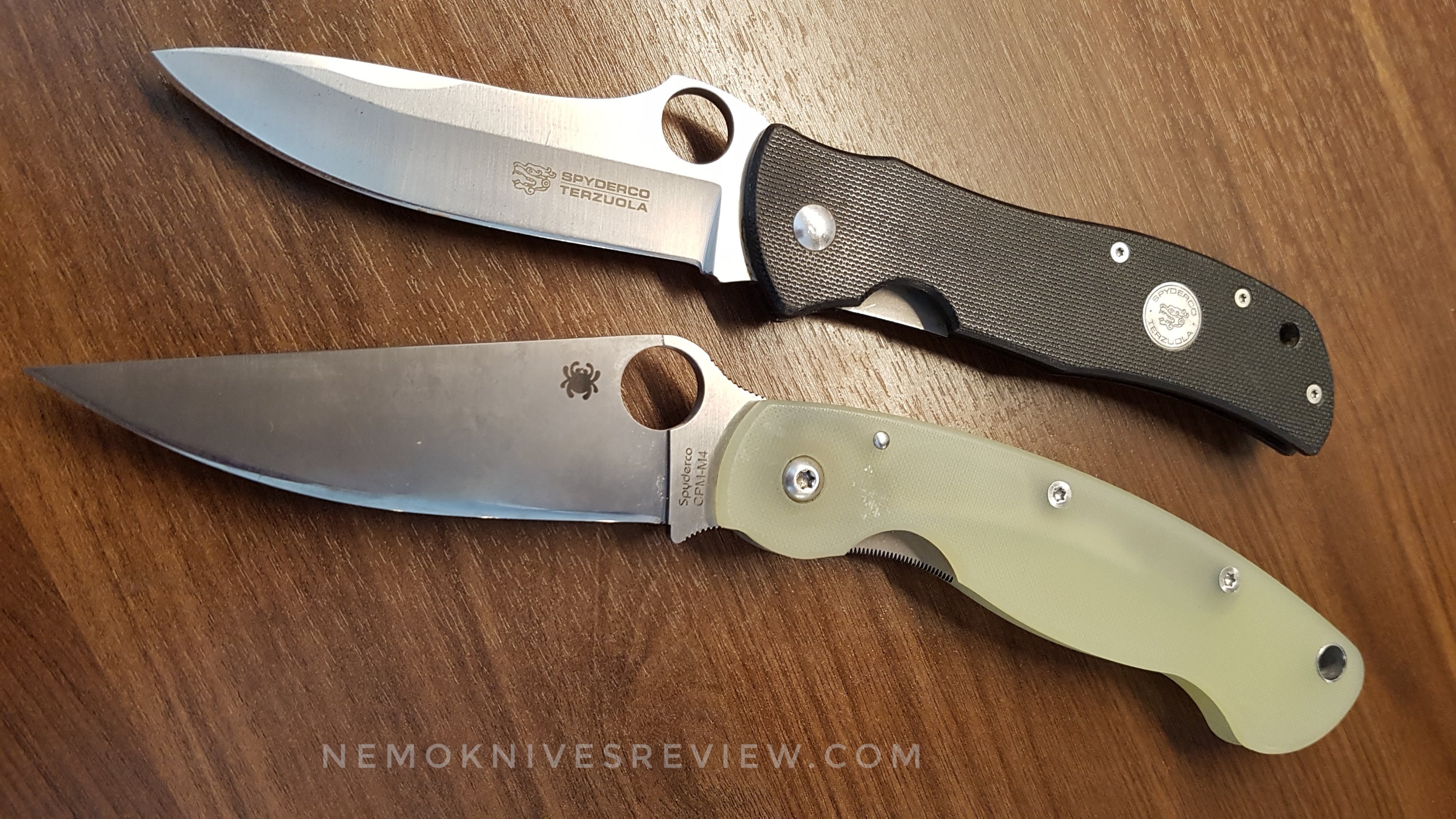
It has been 3 months since my Millie in CPM-M4 has landed in my pocket.
I believe it’s time for an update about it since it has been used a lot.

It is my first “new handle” C36 as mentioned here in my previous post.

Is there any change in my end line user experience ? Not really apart loving the new stop pin and the larger lanyard hole. It was easy to clean in the previous version, now it is easier and I clean it a lot as it’s used in the kitchen.

Smoothness ? As usual. The main break is the strong detent and the strong liner lock. It is open in a breeze with the major finger or by spyderdrop. The factory edge has been kept for almost three months. I have decided to refresh it at mid July and now the next step has been passed as I have convexed the edge to suit my need in cutting hard plastic (mainly bottles) before recycling.
There is no vertical or horizontal play and the liner has not moved since I got.
It’s a very very solid lock up !

Again CPM-M4 is my friend. In edge holding but also in refreshing by stropping on leather. The thin point of the blade has been used for delicate cutting on hard materials and it has been very reliable in that role. Choking up the blade gives a very nice whittling tool too.

In the kitchen the knife has been confronted to meat processing: chicken, turkey, rossbeef but also sausages hot or cold, fish…

The pointy point has been used to open a lot of hazelnuts: meaning twisting the blade to open them.
The favorite test in sharpness is how it cut tomatoes. This is a tricky fruit as it skin doesn’t have a lot of support from its flesh.

The Millie has also been used almost daily as silverware confronting its edge to hot and acidic materials. The patina did not come easily and no pit has been noticed. I use some nano oil or some olive oil to keep it in good shape, depending of my needs. Olive oil being less toxic of course.

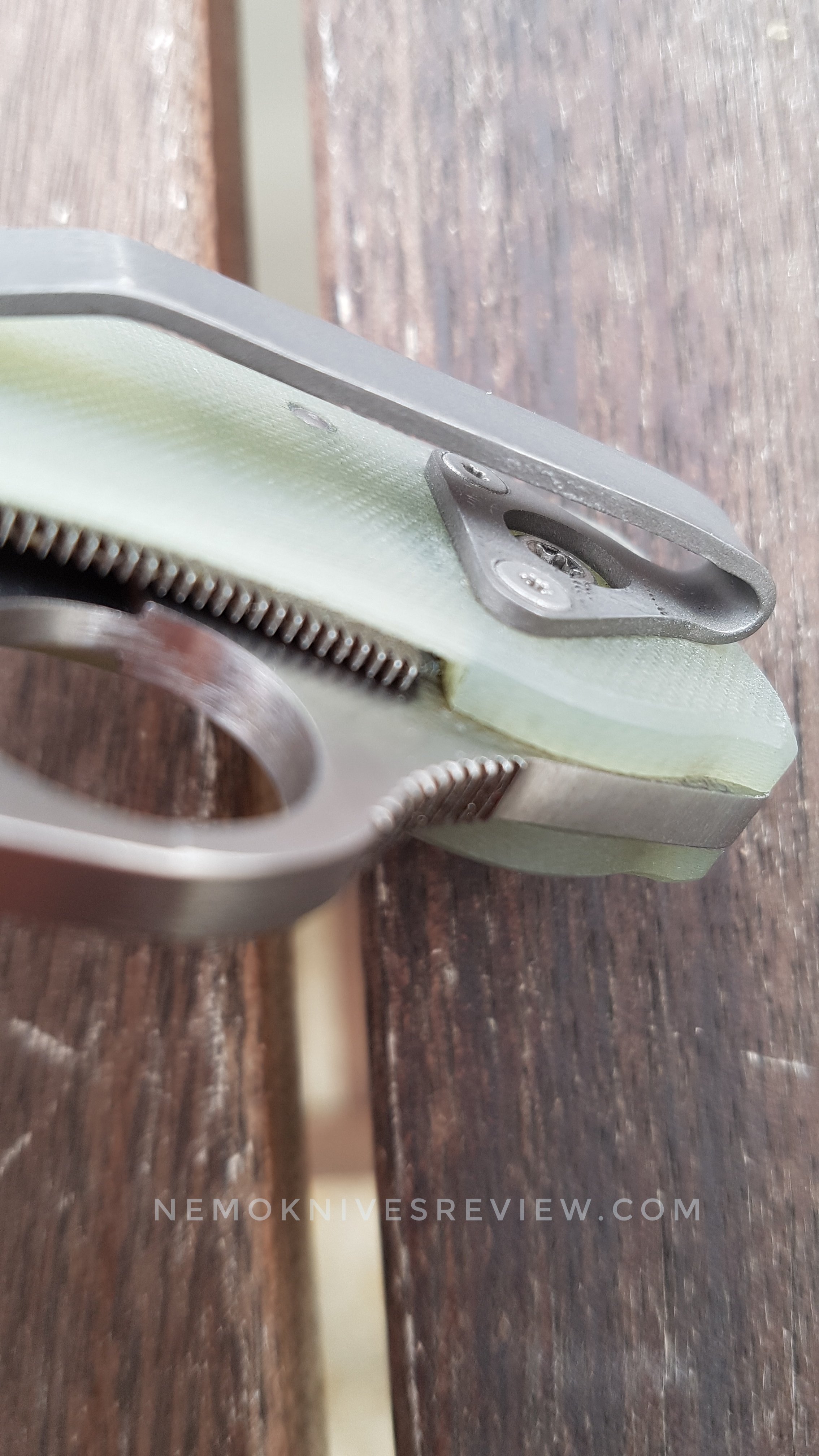
I have invested in a titanium clip for deep carry. I have mounted it but for an unknown reason the pivot was much less smoother after. I think it is due to tolerances a the screw seems to be in some kind of tension but once removed the Millie was smooth again. Eventually I have found I love the original steel clip which is smoother to draw than any beadblasted titanium. But after sanding the titanium clip and bending it for less spring force on the pivot it was perfect for deep carry.

Today it was the opportunity to get rid of the factory edge and start a new chapter with a gently convexed edge. I have used sand paper on my old leather belt. Starting with 500 and finishing with 1000. I like a “rough” feel on my working blade. It comes from scratches and patina and it gives a lot of character but my pleasure is in a mirror finish edge.


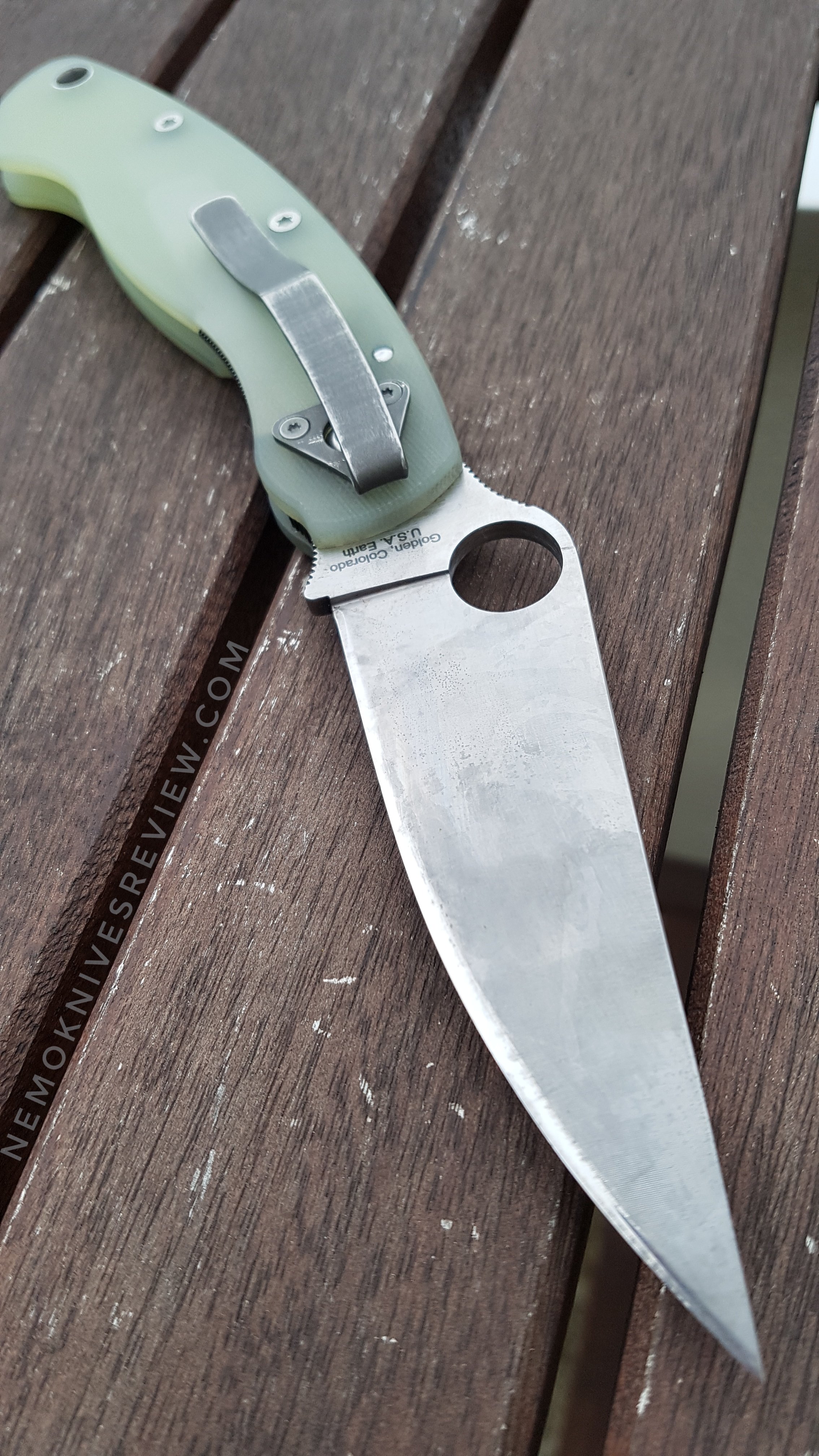
On this model, the Jade or Natural G10 gives a very sheeple friendly look to that relatively big EDC knife. Of course it has been sand also to preserve my pocket lips. I have just kept the original feel/aggressivity of the G10 around the pivot as it is where I put my thumb.

Opinel N°8 Carbone — The Crowned Hand

(You can notice the factory edge is a mess…  Easy to fix !)

I have been using Opinel since my very childhood. I was 8 years whe I was throwing my Opinel N°8 in the dirt figuring I was James Coburn in the Magnificent Seven. The blade was dull like a butter knife and black of stain but it was a constant companion.
Later when I had started to really use it I had discovered that it was really easy to get really really sharp and even to get it to razor sharp and keep it that way with just a steel sharpener. It was with an Opinel paired with a Glock knife (The Field Knife 78 (Feldmesser 78)) that I was living my first bushcraft adventures: building a shelter, making fire and cooking, making bows and arrows, sleeping in the woods…

I was buying some plants for the garden when I saw at the cashier some Opinel N°8 for 8 euros. It was the occasion to buy a new one just for the fun of using it.
I got a stainless N°10 somewhere and a filet… This Tradition Carbon is welcome.

As you can see the factory edge needs some work. But it’s so easy and fun to do.


Locked once closed.

The Jade CPM M4 Military looks like a BMW X5 compared to a Renaud 4L.
But both are fun in their own way.

Manufactured in the heart of the french Alps since 1890, Opinel N°8 hasn’t changed much. It got a new rotating ring which works also to block the blade when closed and this is a really great improvement in my own opinion.
“In the 90s, the Virobloc® system was modified to allow the blade to be locked in its closed position. ”

The con:  a round handle which not help to know in which direction the edge is. You need two hands (or your teeth and one hand) ton open the blade. Two hands to lock the blade. No clip, so the knife will disappear in the pocket. Carbon blade which can rust. But that not a problem if you know how to keep your tools oiled.
The pros: 8 euros !! This is a bargain. Half the price of Douk Douk. A very confortable rounded handle.
To quote them : “To protect our handles from external aggressions, there are two available finishes: buffing and varnishing.
Handles shaped from rare and precious tree species are buffed with wax applied with a cotton disk. For every other wood, we apply a varnish which has been selected for its highly protective properties against moisture and staining.
The varnish is tinted for the carbon range and clear for all the other ranges. To create coloured handles, we first apply a water-based wood stain before the varnish.”
The lock is reliable and easy to check.

A full flat ground blade with a thin edge. 40mm made by hand. German steel with 0.90% carbon heat treated in France at 57-59 HRC. (The Stainless version is Swedish 12C27).
“When it was first designed, the OPINEL blade was made from carbon steel. We still use a similar grade today, with an approximate carbon content of 0.90% which is still better than stainless steel. Our carbon steel is first produced in Germany and finalised in France before being worked by OPINEL.”

And this is where the Opinel is so fun to use. In all my knife it’s with my Opinels (stainless or not) that I got the best results in cutting plastic. Of course the steel won’t last like one of the new super steel but it’s so easy to go back to a very high sharpness: it’s fun.

Of course the Opinel beats all my other knives in my plastic butt/neck bottle tests. Even my great Nilakka or my reground Yojimbo 2.

The crowned hand.

Thinner and thinner !

I’ll  keep my new Opinel in my kitchen drawer. Sometime I will pocket it for going into the woods.
Compared to many modern folders, I know its performance are incredible and shows how thick the edges tend to be especially in the “tactical” scene. Strider comes to mind…
My Opinels wer beaten in wood work by the Dodo ! The Dodo got a belly which does miracle on cutting wooden rods.

I have read in a magazines some years ago that a famous hunter guide in Scotland was using an Opinel N°8 Carbone as his main hunting knife. He was using one knife by hunting season.

Anyway my good old new folder provides me “The original Opinel steel, the famous high quality cutting edge, easy to sharpen.”

Coke bottle are getting thicker at the butt, certainly a new manufacturing using more material and my new reprofile Zero Tolerance 0562CF cannot not cut through when she can still cut easily mineral water bottle’s butts.


The Opinel still can. Thin edge powaaa ! But you notice the 4mm thick plastic at the center.


False Brothers — Wolfspyder and Yojimbo2

Like Apollo and Soyouz, those knives are different but got connections.
Both are Spyderco folders with no hump, no choils, both equipped with compression locks, nested liners, spoon clips and radical blade designs.

Both are made to be carried as EDC. Not too big but not too small with a blade around 3 inches / 9 cm.
Their looks are reflecting their designer’s minds and crafts. Ray Mears is a teacher in bushcraft and Michael Janich is a teacher in martial blade craft.

Both are best carried tip up and you need to pull on their tails to unsheath them. They leave a similar print in and especially out the pocket.
Also both got a consequent integral guards. Only the Yo2 got its guard double with a nested liner though.

The main difference is the way their respective blades are ground.
A scandi grind against a saber hollow ground: the Yin and the Yang of cutting perfs.
Eventually the Yo2 is much easier to get sharp as you got less material to remove. But the Wolfspyder scandi’s once sharp is a pleasure on wood works for very precise controlled cuts. In that area, the Yo2 is more like a wild hungry edge waiting for a firm hand to stay on the course.
The thick point of the Wolfspyder is made to withstand drilling in hard wood.
The shard of the Yojimbo’s point is designed for deep penetrating thrusts… to the bone.

But in the end of the day, both knives are very pleasant EDC companions. Their ultra solid locks make them safe to use hard with no after thought. I was surprised how they can be adapted to mondaine chores with their own characters. Both got great ergonomics improved by a wide guard. The compression locks are not hurting my hand like on my Paramillies and the absence of jimping and hump is a plus in my book when you need to extend your thumb on the back of the blade for power cuts.

Yojimbo’s C85GP2 and C85CFP2 and a Ronin.

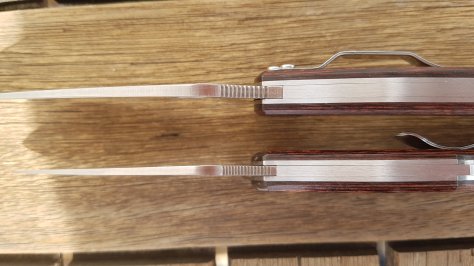
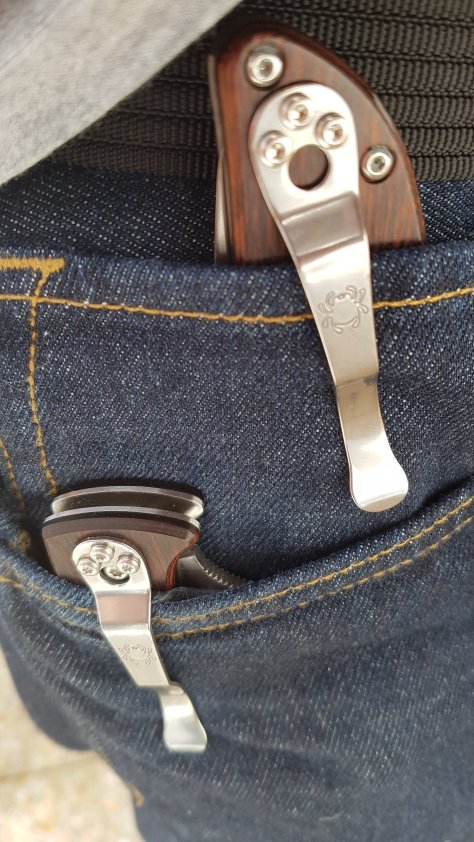
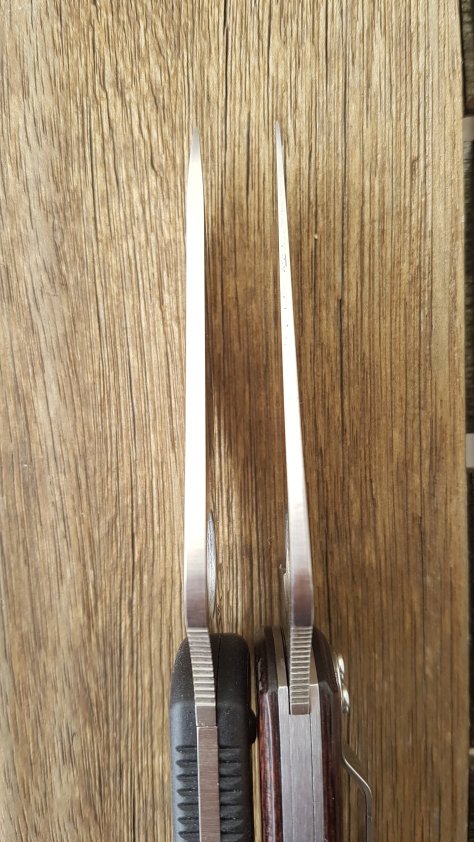
Following my first glimpse on a the Yojimbo Special Run of 2015 , I present you today the classic version of the Yojimbo: G10 handle and S30V steel. There is no difference between the knives but 4 grammes in favor of the CF version (110 vs 115).

Nemo Knives Review Yojimbos

The blade got the exact same length (on the photography, the Yo2 on the right is resting on her clip hence the parallax…). I have also found the detent to be harder on the S90V run but who minds ?

Now the main difference is the steel: S30V vs S90V.

Quoting Jerry Hossom on the knifenetwork.com :
“S90V contains 9% Vanadium. S30V contains 4% Vanadium (originally it was planned for 3% and thus the name). Vanadium carbides are VERY hard and provide a lot of wear resistance. On the flip side of that S30V was designed to be very tough; it resists chipping and breaking. S90V was designed to be very wear resistant, so it’s really a tradeoff. If you’re very careful with your knives, don’t toss them in the sink or hammer them through hard beef bones, S90V will do very well. If you’re rough on a knife, S30V will be a better choice. I’d likely choose S30V for larger knives, because they’re subjected to greater stresses. S90V is certainly fine for smaller knives. ”

So how S90V will behave on EDC chores with the Yojimbo blade particular shape especially its very narrow point. I remember the same kind of exchanges on the forums about the point of the CPM 440V (S60V)C36 military and our request to see a Millie with some strong tool steel hence the desire for CPM M4, CPM3V and CPM Cruwear version.

Back in 2002 I got the chance to own a Ronin made in VG10. The Ronin was a Mike Janich and Mike Snody collaboration on a SD fixed blade and more precisely a neck knife. I used mine for every day chore until the tip get broken and I was obliged to regrind it.

Here is my 15 year old Ronin next to the Yojimbo.

What I love in this design was the way It would cut on hard material without compromise the edge: only the point was touching the plate for example.
Then as S90V is known for its wear resistance, I should be able to keep the point sharp for a longer time…. And time will tell.

Some words from Mike Janich taken from the Spyderco Forums:

“Hey, Guys:

Thank you all for your comments and enthusiasm regarding the Yo2. I am very pleased to have it in production and I’m thrilled at the way it turned out.

I wanted to share a couple of fine points regarding the design. Like everything else I do, I like to explain why. You are free to agree or disagree, like or not like, but at least you’ll have the information to make a decision.

With regard to the not-fully-exposed Spyderco hole, I wrestled with various options on this during the design. I did not want to do the large index-finger choil of the original Yo because it narrows the grip too much in that area and starts to force the hand into a saber grip. The goal was to keep the closed knife as narrow as possible to preserve access to the pocket.

I had a similar challenge when I designed the Be-Wharned. One thing that I learned during that process was that the natural hand position for a thumb opening is typically not with the plane of the handle completely flat. Most people naturally hold the knife palm up, but with the knuckles at about a 45-60-degree angle to vertical. That means that your thumb also indexes the hole (or stud) at an angle, not flat on top of it. With the Be-Wharned, holding the knife at this natural angle and driving the thumb straight along the chamfer of the handle produces the most positive, reliable, and comfortable opening.

With that experience as a guide, I focused on the functional part of the Spyderco hole. When the closed knife is viewed with the edge down, tip to the left, this section is from 12 to 3 o’clock. That’s where the thumb actually bites and drives. That part of the hole is completely unobstructed.

As for the lock release cutout, I purposely made it smaller than that of the Para2. There are two reasons for this: First, some users–especially those who grip the handle tightly with their index fingers during opening–get a slight pinch from Compression Locks as the blade is opened. This is caused by the liner moving into the G-10 scale as the blade clears the detent ball. To mitigate this effect, I asked that the top of the Compression Lock tab be recessed slightly below the top edge of the G-10 scale and purposely made the recess smaller.

Second, speed closing of the knife is not high on my priority list. I close the knife by pinching the lock between my thumb (on the G-10 scale) and the nail of my index finger (on the lock tab). I can do this (and have done it) all day long without soreness or fatigue. For me, it’s perfect the way it is. Most importantly, the knife closes exactly when I want it to and I still enjoy both the extreme strength and the I-don’t-need-to-put-my-fingers-in-the-path-of-the-edge safety of one-handed closing.

I chose the standard hourglass clip for the Yo2 because it has been refined and perfected over the years. It works great, so why reinvent the wheel? Also, savvy Spyderco fans know that the same basic clip design used on the Yo2 is used on the Endura and Delica, but in black (and with the addition of the lanyard hole that matches the holes in those knives). Don’t like the shiny clip on the Yo2? Buy a replacement clip for an Endura for a few bucks and you’ve got an instant subdued clip. How easy is that?

As far as clip position goes, most folks know I prefer tip-up carry. The key to getting a personal defense knife into action quickly is being able to draw it and immediately open it without having to change grip position. The key to that is making sure that the overall size of the closed knife, the position of the Spyderco hole, and the height of carry are all proportionate to the average hand size. If you have a big knife with a deep-pocket clip, it may carry discreetly, but when you draw it, you’re holding it by the butt end with your thumb a long way from the hole. Unless you can magically Viagra your thumb into growing, you have to change your grip to get the knife open.

The clip placement on the Yo2 makes the knife ride high enough so that, with a proper draw, your thumb is automatically on the opening hole when the knife clears the pocket.

If you prefer discretion and a low profile over deployment speed, I purposely added tip-down carry to the Yo2. The clip holes at the pivot-pin end of the handle are as close to the front edge of the handle as physically possible to support deep-pocket carry. Yes, it’s tip down, which is slower. So is deep pocket carry in general. If you need deep-pocket carry and speed, arry tip down and use a Spyder-Drop opening. You’ll find that although a small portion of the Spyder Hole is obscured, there’s still plenty of surface area to grab onto. As you pinch the hole with your thumb and index finger, you’ll also find that your fingertips start to push the handle away from the blade, “cheating” your start on the opening.

As for a lanyard hole, I’m not a fan of fobs, so I opted for the additional strength of a screw post at the butt instead of a lanyard tube. However, if you are a lanyard fan, there is still enough room between the blade edge and the screw post to wrap a thin lanyard around the post with a cow hitch. That keeps the lanyard centered in the handle instead of wrapping around it and makes for a sleeker package. Think of a typical flashlight lanyard where the loop that attaches to the light is thin and strong and the rest of it is 550 cord sized. If you must use 550 cord for the whole lanyard, pull the guts out of it so it wraps flat around the screw post.

I hope this helps you better understand why the Yo2 is the way it is. A lot of thought went into it and it is truly a reflection of more than 35 years of experience, training, and daily carry of personal defense knives.

Stay safe,

Mike

P.S. As far as meat cutting tests go, yes, that was a big part of my personal R&D of the prototypes. Simple answer: It has more blade length than the original Yojimbo. It therefore cuts even deeper.”


Another one from Michael Janich in August 2012:

“Thanks for the discussion and your continued enthusiasm for the Yo2.

When I designed the blade for the Yo2, I took a lot of inspiration from the Manix2, both because I like the way it cuts and because, as a Golden-made product, its manufacture respresented a known core competency for Spyderco. Combining a partial hollow grind with a thick, strong spine provides a great balance of edge geometry and strength. Moving the point up towards the blade’s centerline moves it toward the thicker part of the blade; however, if the hollow grind runs parallel to the edge all the way to the point, the resulting point thickness is functionally the same as what you get with a wharncliffe.

The wharncliffe blade excels at cutting because it cuts with full power all the way to the tip. An acutely angled tip also provides superior penetration with minimal effort.

From a utility standpoint, the Yo2’s tip is analogous to an X-Acto knife and is excellent for detail work. The heel of the blade, closer to the handle, is extremely strong and more than capable of tackling most cutting chores for which knives are appropriate tools. In general, if you focus on using the part of the blade that is most appropriate to the task at hand, you can perform a wide range of cutting chores without a problem.

Having designed several wharncliffe blades now, I have also been privy to the warranty repair claims concerning these blades. In all honesty, broken tips are rare. The ones that do come in typically come with a story that begins “I dropped my knife on concrete/a hard tile floor….” or “I know I shouldn’t pry with a knife, but…”

Like a box cutter, a wharncliffe cuts with both power and finesse because of its straight edge. If your style of utility knife use actually focuses on cutting, it will serve you well. If your utility knife use focuses on prying, digging, or using your knife as a jack handle, buy a knife that is better suited to that type of use–and don’t expect it to cut very well…

I hope this helps.

Stay safe,

Mike
Michael Janich
Spyderco Special Projects Coordinator
Founder and Lead Instructor, Martial Blade Concepts”