
“I am the Pie in the sky
Looking at you
I can read your mind…”
This knife used to have the MSRP of a small Sebenza but as it’s been discontinuited I got the chance to buy one at a fraction of its original price. And really, I’m glad to be a later adopter of that wonderful and unique attempt to make a hardchore non locking knife.

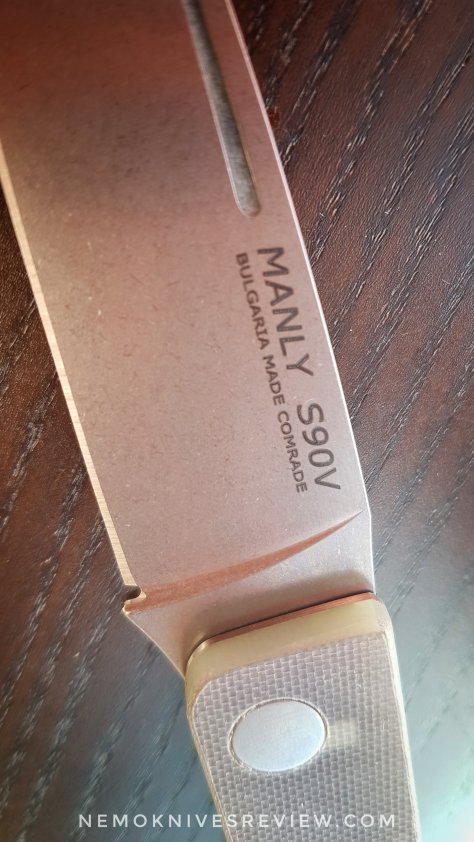
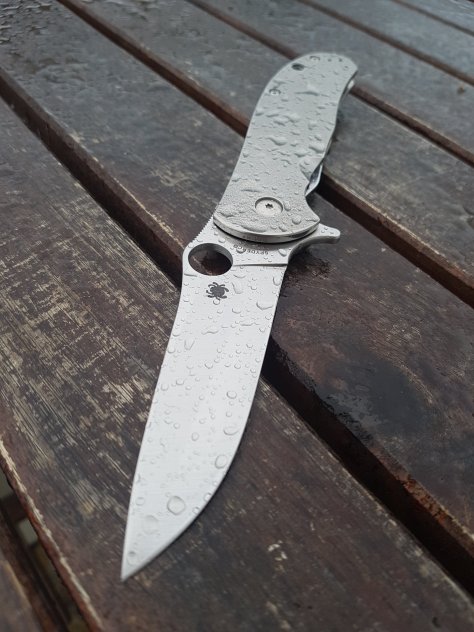
The PITS is the acronym of Pie In The Sky. It’s a folder based on Mike Read’s knives. He is a knifemaker in the UK. So, this knife has been specifically designed for EDC in the United Kingdom. In brief, her Majesty’s laws say you can carry any knife if you have a “good reason”, but just in cases there isn’t a good reason you can still carry a folding knife with a blade of less than 3 inches without a lock. The UK designed small Wolfspyder with it compression lock is not UK law friendly but the Urban is ! Also the slipjoint Manly Comrade won’t because of its longer blade… but the PITS will !
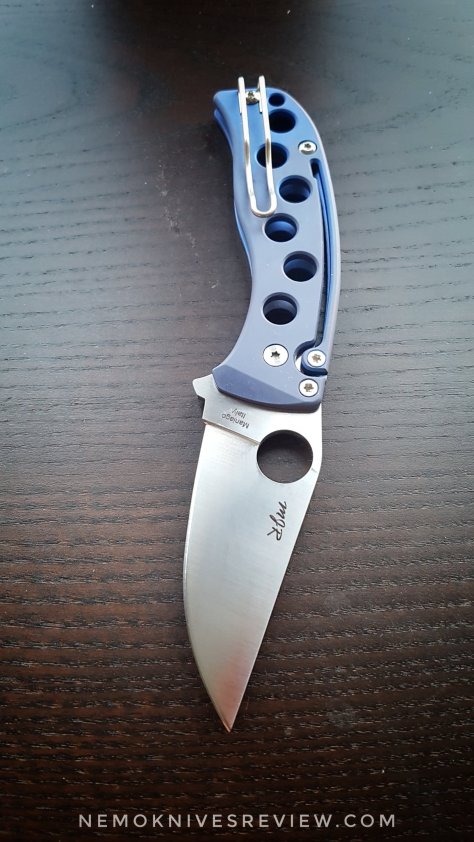
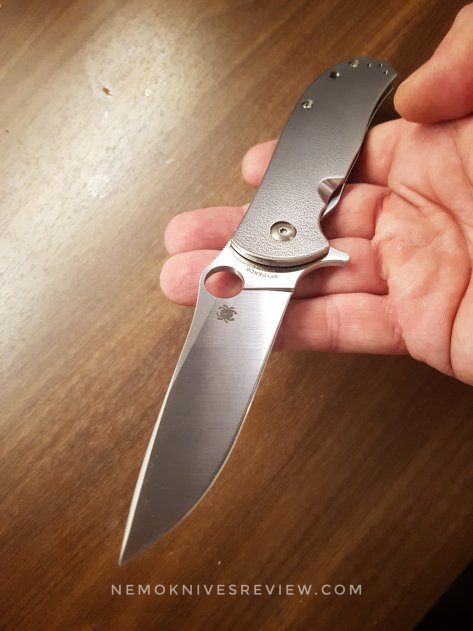
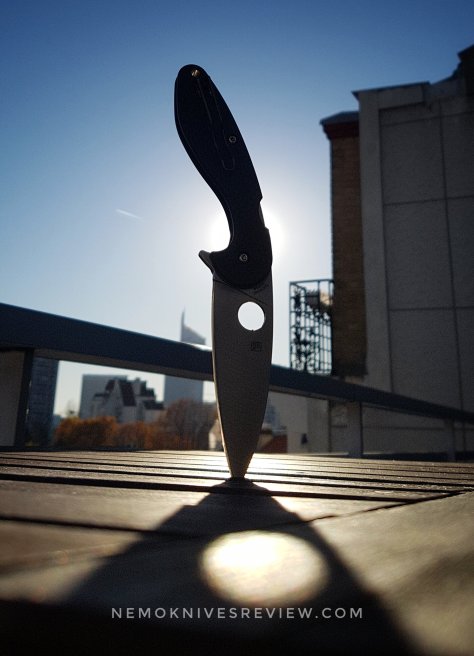
This knife is an eye candy. It has a powerful full-flat ground N690Co steel clip point blade and a stunning precision-machined skeletonized blue anodized titanium handle that aids in providing a very positive texture for grip.
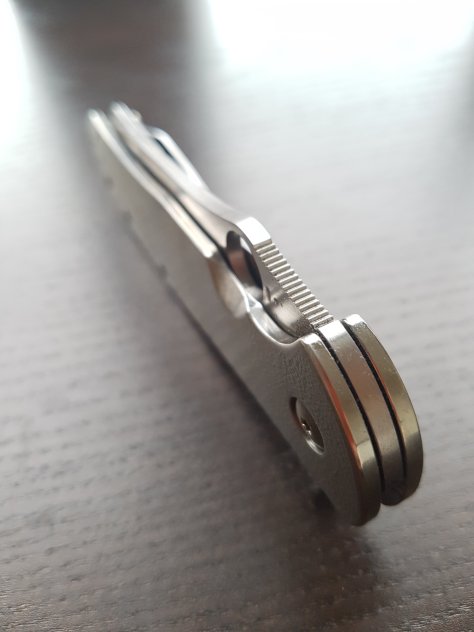
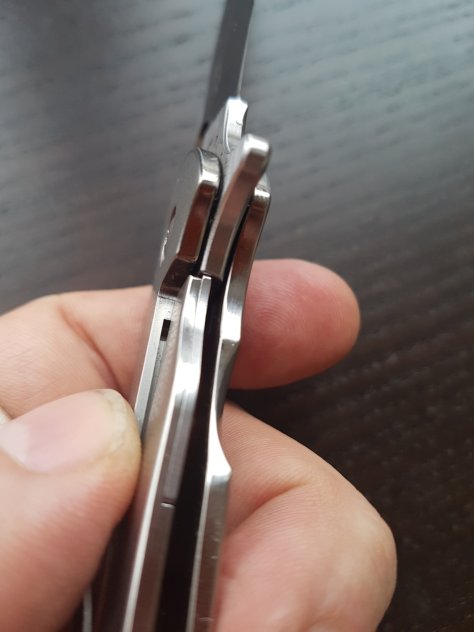
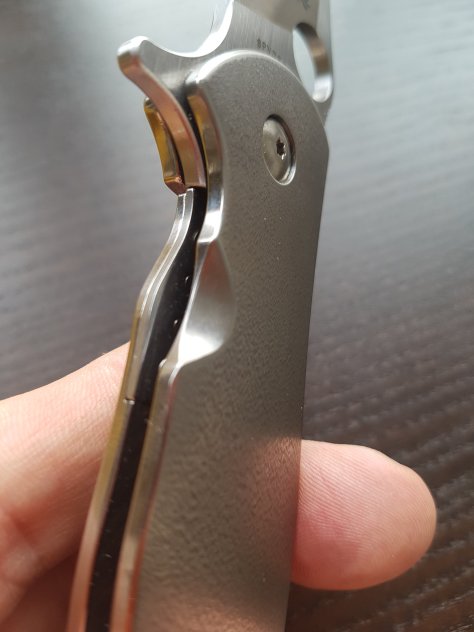
The handle features integral split spring arms to form the knife’s unique slip-joint mechanism. Titanium has got that elasticity that Chris Reeve was one of the first to explore for his Integral Locks. Here you have another variation of the use of that incredible metal here used as a strong spring.
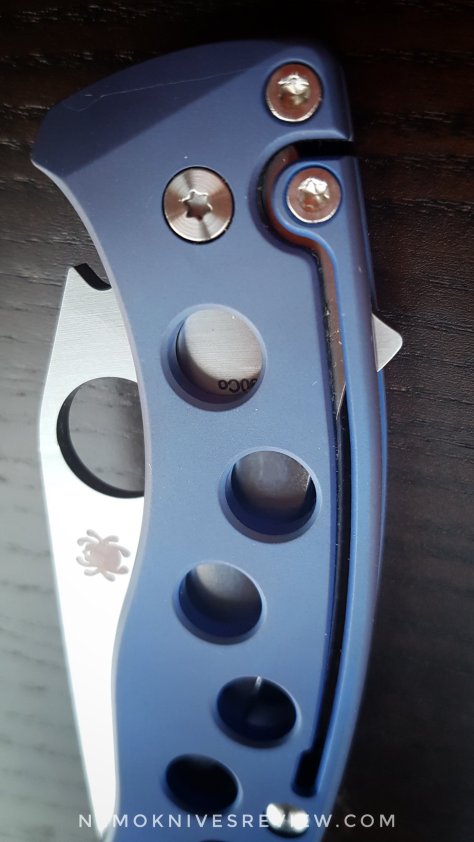
The very good thing I will repeat again and again is that Mike Read has designed this knife to be a tough, hard-use folder and, yes, this is not easy and also this is a good thing.
Not many non-locking knives are destined to be used hard. The Manly Comrade is an exception for example… but here, the PITS is really shining in another department: in the one hand opening and closing realm (making it illegal in Danemark too BTW) . There are no mid steps like on the Comrade as the action is smooth until the blade is fully opened or closed – making even Spyderdrops possible !

Then you got the choice to apply your thumb on the bar and it’s cleverly secure. Zero play in any direction. Also there a quillon after the choil where your index can rest; meaning, held in the proper manner, the blade cannot close on your precious finger.
Something you ask to a hard working tool is the ease of cleaning. The handle is fully open by construction and thanks to the holes in the titanium slap, it’s very easy to clean and rinse your blade – also there is a lanyard hole !

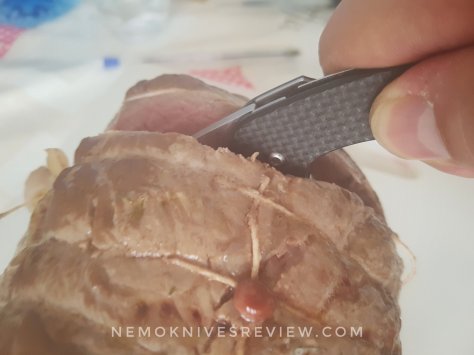
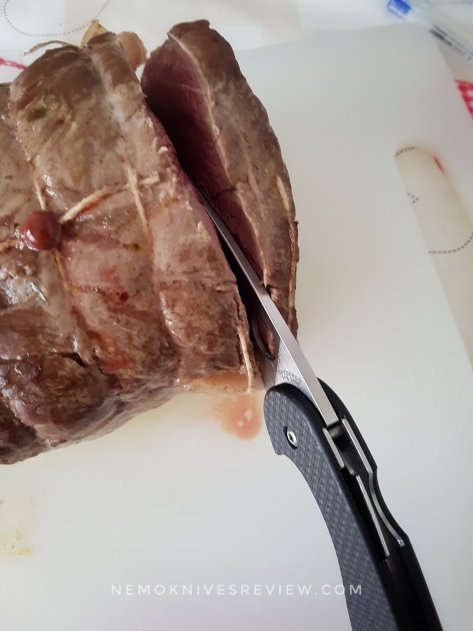
N690Co, heat treated (certainly with cryo) in Maniago, is a just a great steel for an EDC. I always considered it as some kind of European VG10. It can get back to razor sharpness very easily and it stays sharp long enough between touches up. It’s not brittle and I got the same sense of all-terrain steel (like VG10 on Fallkniven knives) as when I had done hard testing of other fixed blades made in Maniago. N690co is very stainless. It’s the kind of steel to use around the kitchen and even close to the sea with no after thought; just rinse it!
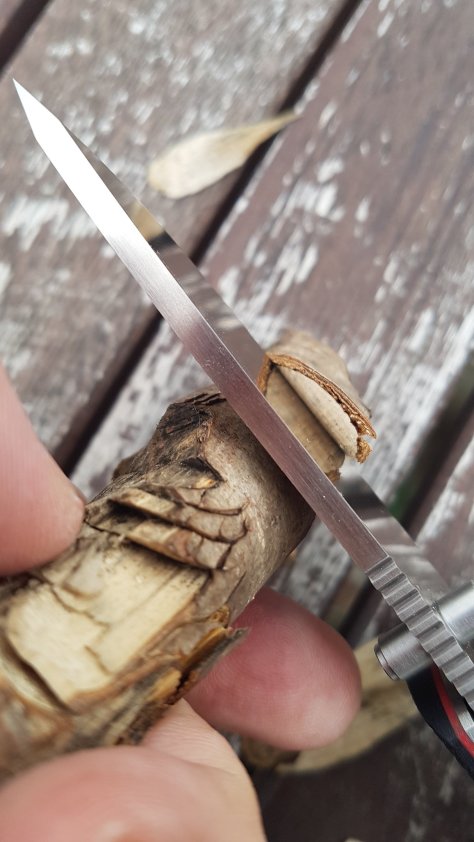
Also the geometry on the PITS being very thin and with its belly, the first cuts in wood were really deep. The blade did not move/unlock even when stuck in the wood fibers. So this is a very secure non-locking knife. Immediately, you bond with it and want to use it.
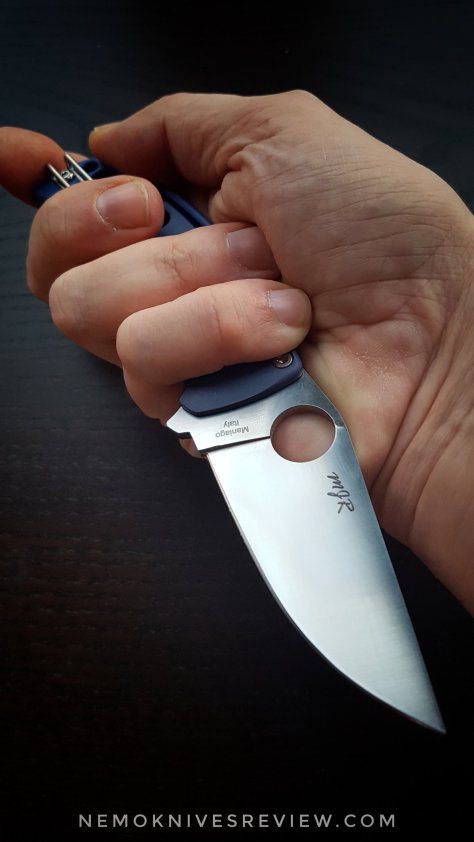
The handle is generous even in reverse grip and it fits in the hand very well for such a small knife. This is in hammer grip a four fingers knife, which is welcome for hard cuts.
I have found it very confortable with zero hotspots when held tight.

Also the full titanium handle gives a near to perfect balance. The PITS is light and fast in the hand, it is alive. To close the blade it’s better to push the spine with the thumb as the notch is not easy to pass.
The PITS Folder includes Spyderco’s best clip: the deep carry wire clip for reversible tip-up carry. It almost disappears in my pocket.

SO here we have got a non threatening tool, with a beautiful blue handle. It cannot make non knives people unconfortable at all. Also titanium being not easily detected by metal detectors, the PITS should not make them beep easily…. No, I mean you can cut live wire with as titanium does not conduct electricity… oh well, I only have bad recommandations tonight.
So here we have got the Pie In The Sky, a knife which is going to kick my Urban out of my pocket when I go for a walk in the city. It’s very pleasant to have a tool engineered to be a user. Next step is to remove the sharp edges on the blade spine and give a little convexed edge to this baby…
More to come soon.
“…I am the maker of rules
Dealing with fools
I can cheat you blind
And I don’t need to see any more
To know that I can read your mind, I can read your mind …”

The Alan Parson’s Project lyrics is an idea from our editor: Pascal. 🙂
last edited by Pascal Jaffré on 24 jan 2018.




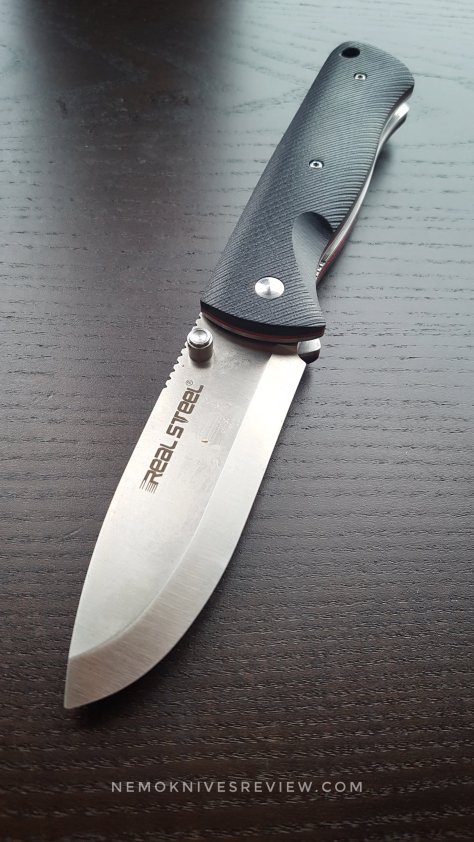

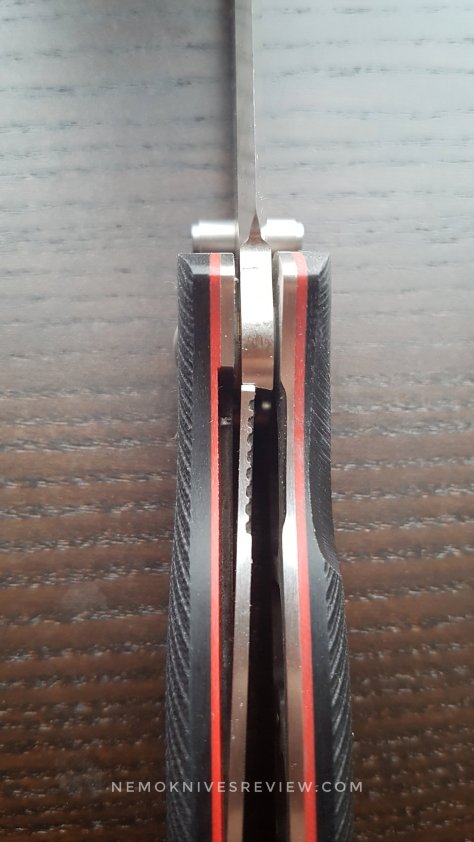
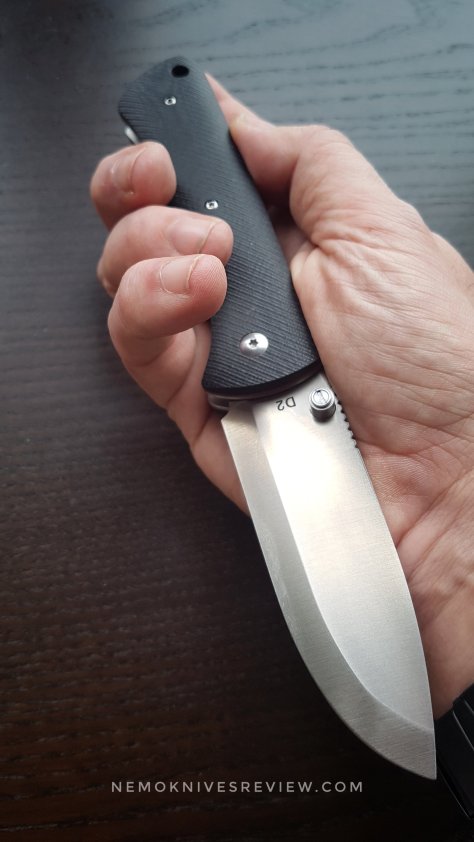
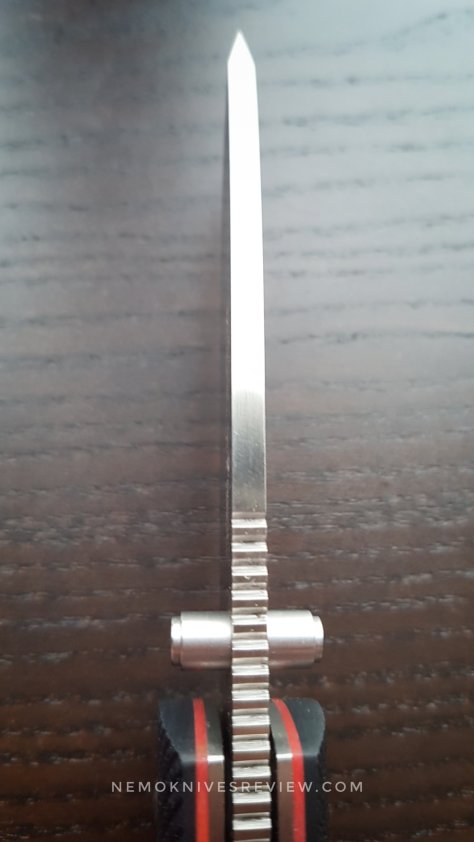



 The knife snuggles perfectly inside the pouch you can pass in a belt.




 The blade is perfectly centered. Don’t forget we are talking here about a 40 euros folder.
 The deep clip is trademarked and beatblasted.


 Every Spyderco’s fan needs
  Anyway this
 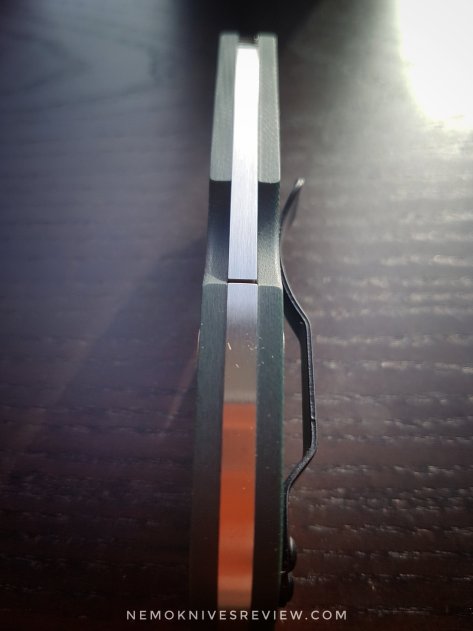 But the only steel parts visible are the spacer and the lock (pictured here before sanding). It makes a very clean design. And also a knife more impact resistant. I have had steel liners knives warped after a fall. A tiny tiny change which made the blade touch the liner. You oblige to bend it back. Also steel liners are a place were rust can appears and you cannot spot it. So the more G10 the happier I am, as I need to rinse my knives often under the tap. Also the balance it now just perfect: just behind the pivot. Also there is only 2×3 screws in its construction, the pivoting part of the lock is a pin not a screw like on the majority of Native. You can find that pin on the lightweight versions, but also the new carbon fiber version C41CFFP5 which also share a S90V blade… Again, the less screws, the better. (Screws can get loose and be lost) This is the same kind of construction found in


 Anyway, sanding is a way for me to appropriate that knife, to custom it to my taste. Rare are the knives I did have the urge to do it but it’s also a pleasure to twist it to my likings and I prefer it that way.
  The Native is, like my Delica, my Falcon, my Techno, my Lil’Nilakka, a locking non threating knife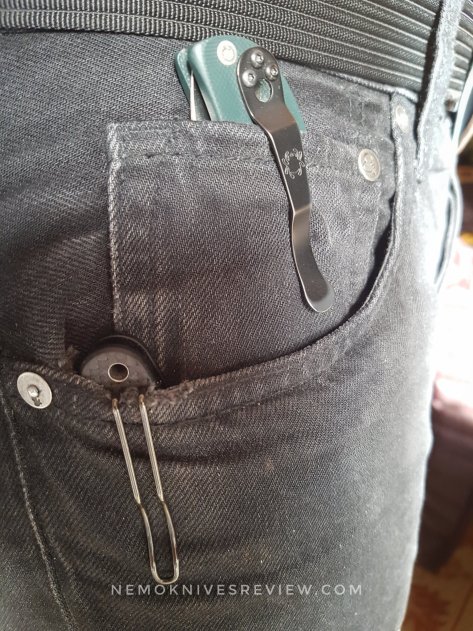
 And of course it was able to push cut through a plastic bottle butt with ease. More to come soon.

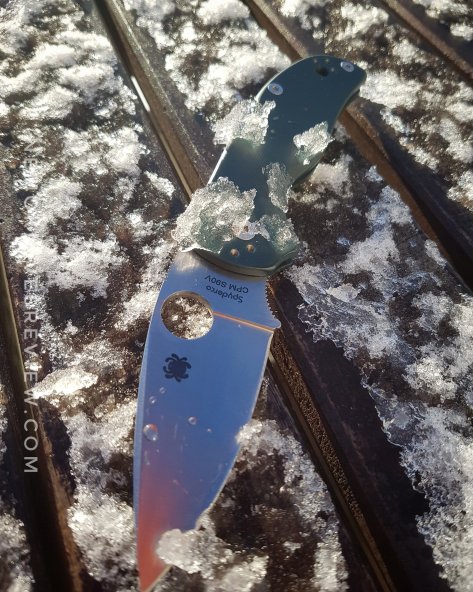

 (Bud Nealy’s knives were sold as “fast response defense knives”. Here a Peshkab near a Spyderco Mantra 2 for scale purposes.)






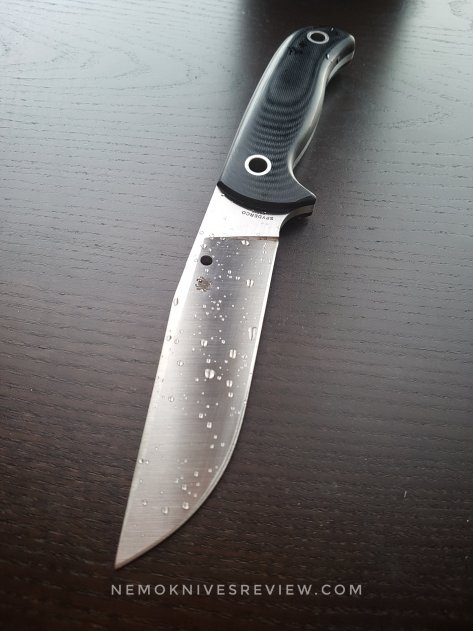
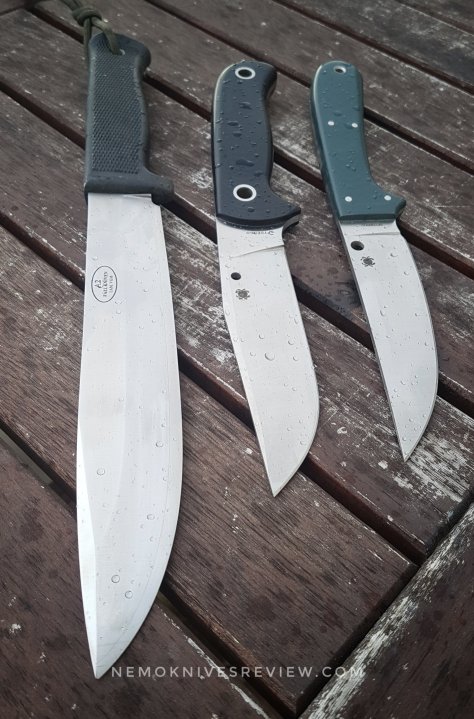


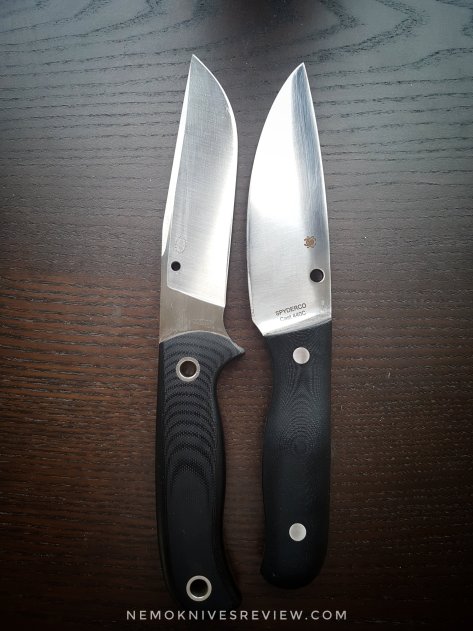


 My
My 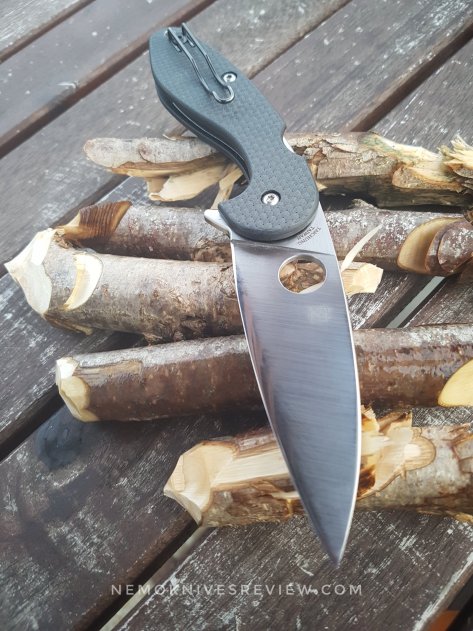 You can see I have mounted my Ed Schempp Bowie clip for now. Now that I feel confident with S30V heat treated by Spyderco, since I have play with the Nilakka (Taichung) and the Wolfspyder (Golden), both radicaly scandi ground knives, I have decided to give the Nilakka a very very thin convex edge.


 On plastic and wood, I have twisted the blade inside and no harm has been noticed to the edge or the mechanism. I have used it hard at full grip and got full confidence in it in hammer or reverse grip. Like on the other compression locks knives it’s so easy to close it and put it back in the pocket, preventing any way to harm yourself or the others. It is especially great when working around animals like horses for example, when you want your edge to be out of play as soon as possible.


 Oh and I really enjoy the fact their zero jimping. Most of the time I’m obliged to file them a bit on the corner to have them to my taste. Here no need for jimping and as a tool the Sliverax is perfectly anchord to my hand. The CF/G10 material is working perfectly without chewing my pants. After EDCing


 NemoKnivesReview